
Tanzania’s government has reaffirmed its commitment to strengthening plant health services through the Tanzania Plant Health and Pesticides Authority (TPHPA) as part of broader efforts to improve agricultural productivity and achieve the targets of the national Agenda 10/30 and Vision 2050.
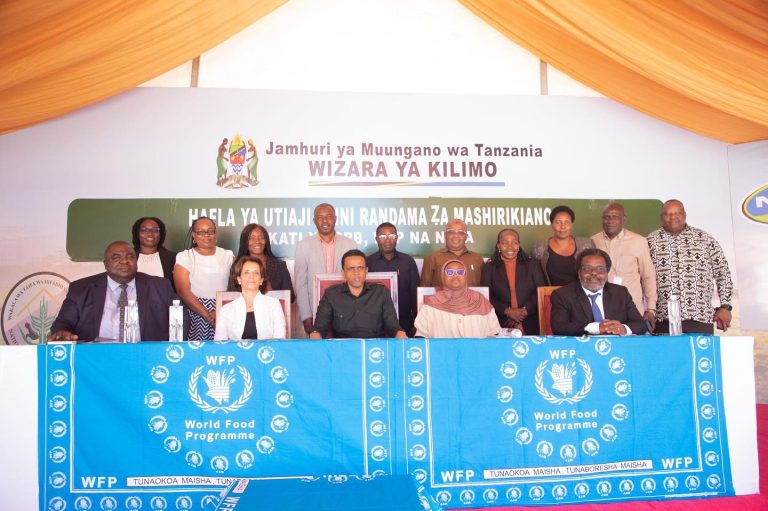
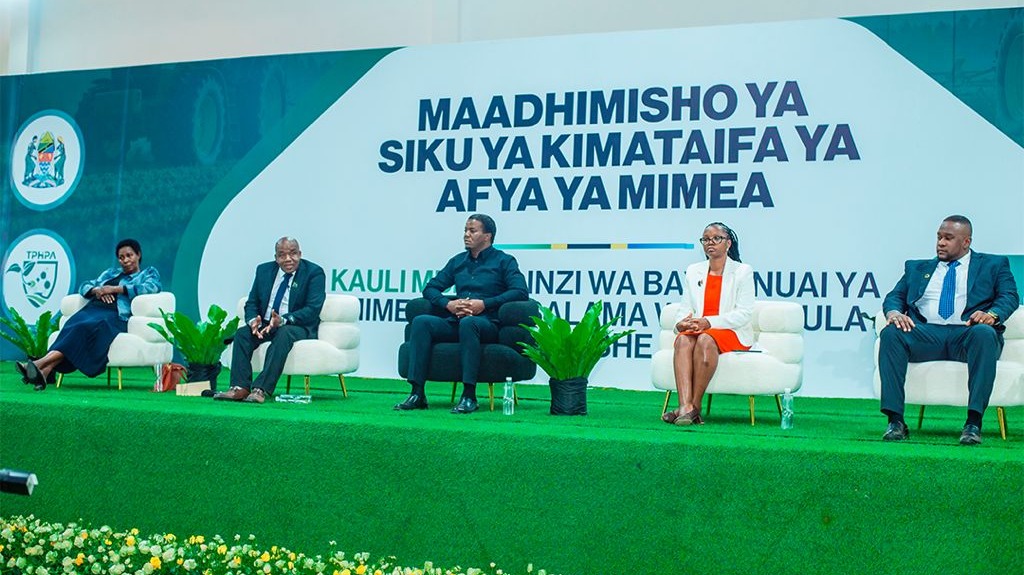
Deputy Minister for Agriculture David Silinde made the remarks on May 12, 2026, while representing Agriculture Minister Daniel Chongolo at the climax of the International Day for Plant Health celebrations held at the John Samuel Malecela Grounds in Nzuguni, Dodoma.
Silinde said the government would continue investing in plant health systems to safeguard agricultural output, emphasizing the sector’s central role in national development.
He also commended President Samia Suluhu Hassan for her efforts in expanding digital services across the country, noting that the initiative has delivered significant benefits to citizens. At the same time, he stressed the need for increased efforts to strengthen biodiversity protection to ensure food and nutrition security.
On his part, TPHPA Director General Prof. Joseph Ndunguru said Tanzania achieved 130 percent food sufficiency in the 2024/2025 period, with total food production reaching 23,783,128 tonnes.
Among the major achievements contributing to this milestone was the successful control of rodent infestations in 19 regions, saving 408,109 acres of crops and benefiting 66,511 farmers.
The authority also managed to control more than 231 million destructive quelea birds that had invaded rice, sorghum, and millet farms, an operation that saved approximately 1,611,000 tonnes of crops.
In addressing fall armyworm outbreaks, TPHPA carried out interventions across 219,411 hectares in 49 districts nationwide, rescuing more than 529,347 tonnes of maize and sorghum.
This year’s International Day of Plant Health was commemorated under the theme “Protecting Plant Biodiversity for Food and Nutrition Security.”