
By Henry Kinyua
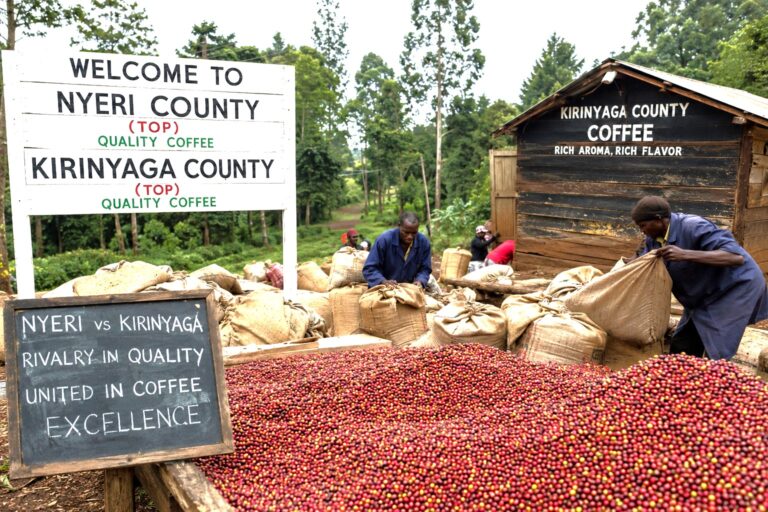
When conversations turn to Kenya’s coffee success stories, Kirinyaga County is almost always at the centre of the discussion. Home to 14 Farmers Cooperative Societies (FCSs) operating through 74 coffee factories, the county has built one of the most integrated and successful coffee ecosystems in the country.
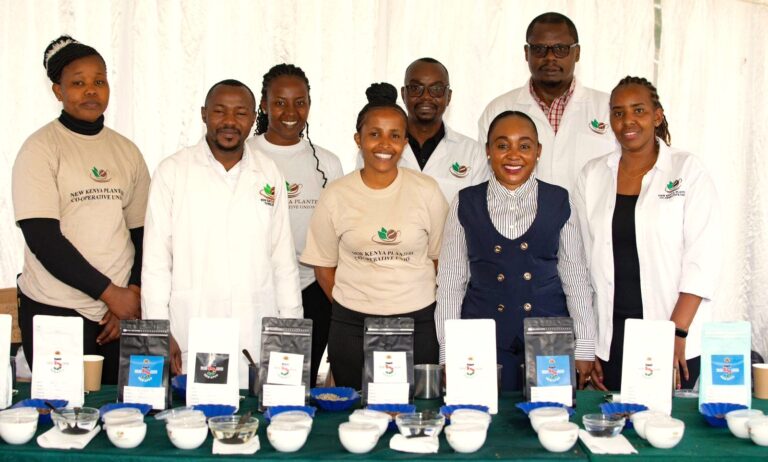
At the apex of this structure sits Kirinyaga Union, a farmer-owned institution that has evolved beyond its traditional role to include a modern coffee mill, a licensed brokerage firm, and a direct-sales marketing agency. This gives Kirinyaga farmers greater control over their coffee value chain, from processing and marketing to accessing premium international markets.
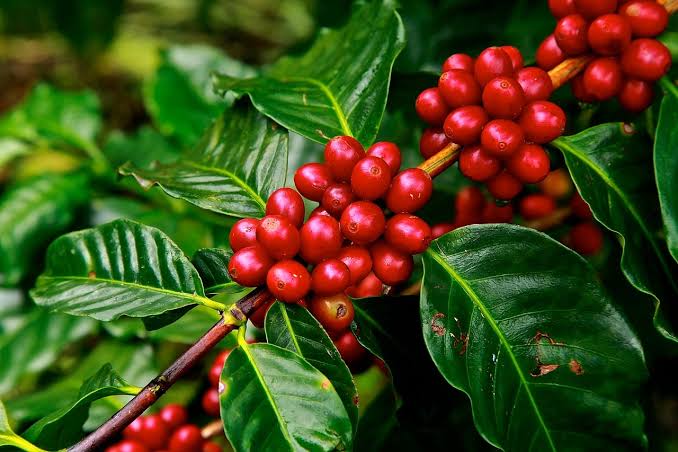
The results are evident in production figures. Over the last three seasons, cherry production in Kirinyaga has grown consistently from 42.3 million kilograms in 2023/24 to 45.7 million kilograms in 2024/25, and now stands at 49.1 million kilograms in the ongoing 2025/26 season. This represents an increase of nearly 7 million kilograms in just three years, a remarkable achievement at a time when many coffee-growing areas are struggling with declining productivity.
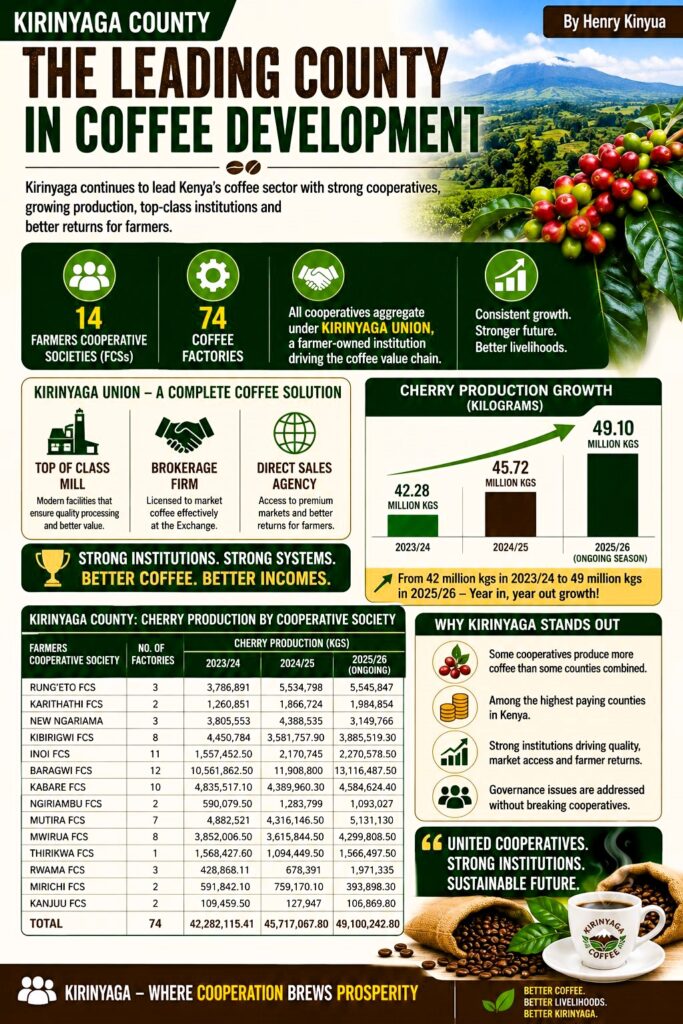
Several cooperatives in Kirinyaga have reached a scale at which they individually produce more coffee than some entire coffee-growing counties. Baragwi FCS, the county’s largest cooperative, is projected to deliver over 13 million kilograms of cherries this season, while Inoi FCS is expected to exceed 2.2 million kilograms. Other major producers such as Rung’eto, Kabare, Mutira, Mwirua, Kibirigwi, and Karithathi continue to post strong volumes year after year. Equally impressive is the county’s record on farmer returns. Kirinyaga cooperatives have consistently featured among the country’s best-paying societies, reflecting strong management, quality coffee, and effective market access. While farmer payment rates vary across cooperatives, the county has repeatedly demonstrated that high productivity coupled with efficient marketing can translate into better incomes for growers.
Perhaps the most important lesson from Kirinyaga is not just about production or prices: it is about governance. Like every coffee-growing region, the county has experienced disputes, leadership contests, and governance challenges. However, unlike many areas where such disagreements often result in the fragmentation of cooperatives, Kirinyaga has generally managed to address internal issues while preserving the strength and scale of its farmer institutions. The focus has largely remained on improving performance rather than creating new organizations.
As Kenya seeks to increase national coffee production and improve farmer incomes, Kirinyaga offers a compelling case study of what can be achieved through strong cooperatives, integrated farmer-owned institutions, investment in value addition, and a commitment to keeping farmers united around a common goal.
Today, Kirinyaga is not just a leading coffee county; it is arguably the benchmark against which Kenya’s cooperative coffee model is measured.
In our next article, we shall examine how individual Kirinyaga cooperatives performed in farmer payments and identify which societies delivered the highest returns to growers. Are you from Kirinyaga County? Which is your Cooperative?