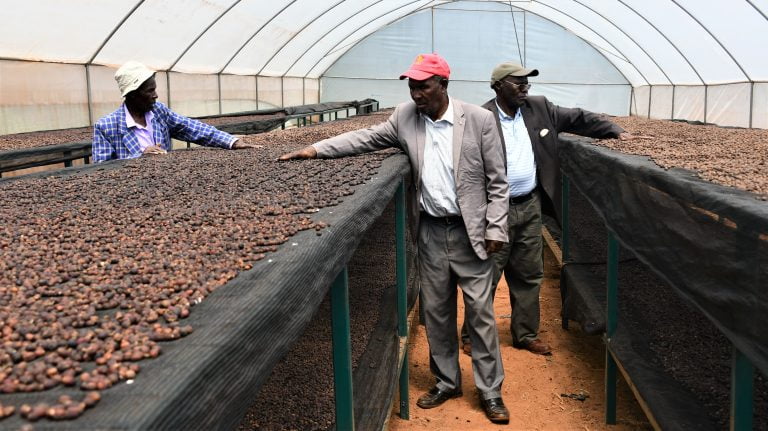


The Kenya National and the County governments have stepped up efforts to revive coffee farming in Taita Taveta County, signalling a renewed push to restore the crop as a key economic driver in the region.
This follows a sensitisation forum held in Wundanyi, led by Cabinet Secretary for Co-operatives and MSME Development Wycliffe Oparanya, who reaffirmed the government’s commitment to revitalising the sub-sector in line with ongoing national reforms.
Speaking to farmers from potential coffee-growing areas across the county, Oparanya said the government is working closely with county administrations to revive dormant coffee zones and expand production in areas with untapped potential.
“The government is committed to restoring coffee farming and positioning Kenya as both a leading producer and exporter. We are partnering with County governments to streamline production, strengthen the value chain and revitalise cooperative societies as engines of farmer empowerment,” said the CS.
He noted that the revival efforts will focus on strengthening cooperative movements, improving farmer earnings, and enhancing efficiency across the coffee value chain.
The New Kenya Planters Co-operative Union is leading farmer sensitisation and capacity-building initiatives aimed at promoting best agronomic practices, establishing sustainable production systems, and facilitating market linkages both locally and internationally.
Taita Taveta Governor Andrew Mwadime welcomed the initiative, saying coffee farming could help diversify the county’s revenue base and boost household incomes.
“We fully support this initiative by the national government. Coffee farming presents a viable economic opportunity for our farmers and can significantly contribute to the county’s development,” said Mwadime.
Coffee farming in Taita Taveta, particularly in the highland areas of Wundanyi and its environs, dates back several decades but has declined over time due to low returns, weak cooperative structures, and a shift by farmers to alternative crops.
The renewed focus aims to reverse this trend through the reintroduction of structured farming systems and stronger institutional support.
At the national level, the government has rolled out reforms aimed at increasing coffee production and enhancing export competitiveness. These include restructuring cooperative societies, improving access to affordable farm inputs, strengthening extension services, and reforming marketing systems to secure better prices for farmers.
The revitalisation programme forms part of a broader strategy to boost Kenya’s coffee output and reclaim its standing in the global market, amid rising demand for high-quality Arabica coffee.