

By Kimuri Mwangi
Kenya is intensifying efforts to transform its agricultural sector through the implementation of the National Agroecology Strategy for Food System Transformation (2024–2033), with stakeholders now focusing on strengthening monitoring systems to ensure the policy delivers sustainable results.
This renewed push was highlighted during a high-level training held in Nairobi from May 12 to 15, 2026, organized by the Association for Strengthening Agricultural Research in Eastern and Central Africa (ASARECA) under its Comprehensive Africa Agriculture Development Programme ex-Pillar IV (CAADP-XP4) project, funded by the European Union and managed by IFAD.
The training brought together government officials, policymakers, researchers, county representatives, farmer organizations, non-governmental organizations, and policy think tanks to build capacity in applying the ASARECA Policy Manager Tool for the joint analysis and monitoring of Kenya’s newly developed agroecology strategy.
ASARECA, an intergovernmental organization representing 15 member countries in Eastern and Central Africa, is mandated to coordinate agricultural research for development initiatives aimed at improving productivity, resilience, and sustainable agricultural production across the region. Its strategic focus includes partnerships and capacity development, technology transfer, policy environment enhancement, and knowledge management, all aimed at accelerating agricultural transformation.
Speaking during the Nairobi workshop, Dr. Alice Nyagah, Agricultural Engineer at Kenya’s Ministry of Agriculture and Livestock Development (MoALD), said the country developed the National Agroecology Strategy in response to major shifts in food systems and the need for a coordinated approach to sustainable agriculture.
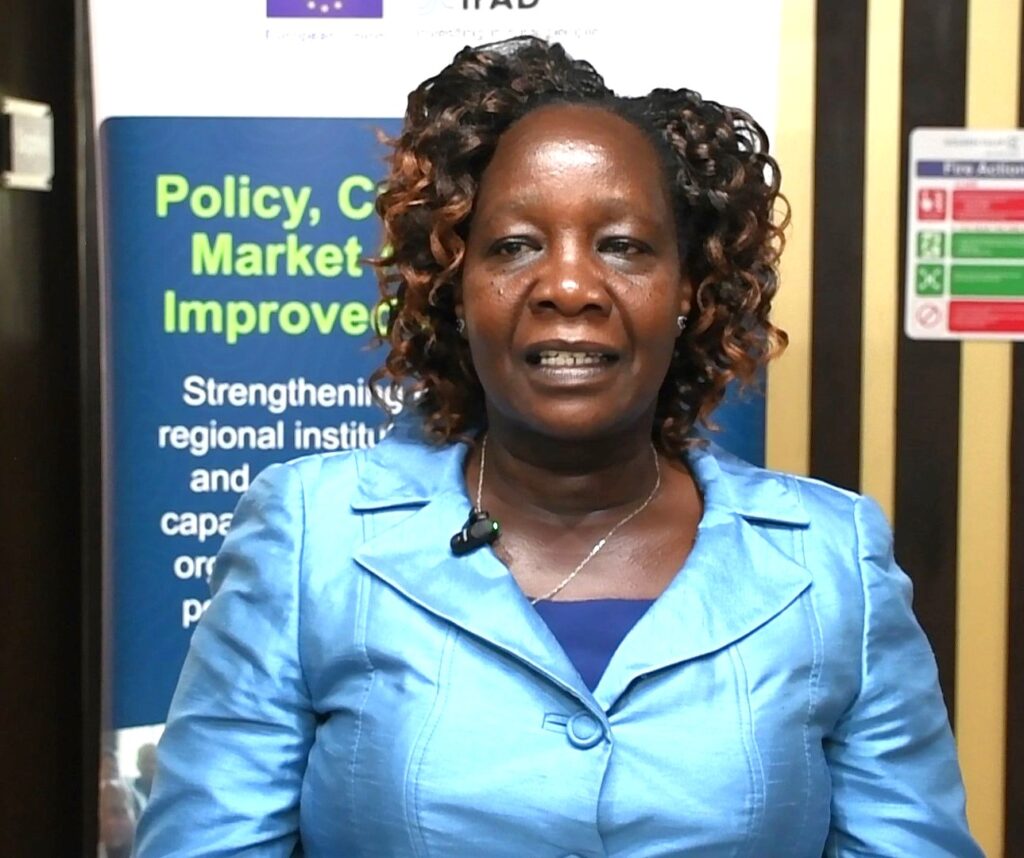
“Kenya has developed the National Agroecology Strategy for Food System Transformation. So today we are here at ASARECA Policy Management Tool training to train stakeholders, government officials, on how to monitor the progress in the implementation of the strategy,” Dr. Nyagah said.
She noted that the strategy was formulated to unify key actors across the agricultural value chain, including government, farmers, producers, and traders, in managing production and distribution systems more effectively.
“This training will help us also to improve our capabilities, strengthen our reporting and data collection,” she added.
The ASARECA Policy Manager Tool, first developed in 2023 and later refined through stakeholder consultations in Nairobi and Kampala, serves as a virtual dashboard that evaluates how well agricultural policies are formulated and implemented.
According to ASARECA Programme Officer for Policy, Julian Barungi, the tool is designed to identify implementation gaps early enough to prevent policy failure and maximize intended outcomes.

“We are here in Nairobi for a training on the ASARECA policy management tool that we have rolled out here in Kenya to analyse Kenya’s national agroecology strategy. The idea is really to identify the challenges so far in the implementation, any obstacles that might be there in the implementation, so that we can correct any challenges at the right time and avoid policy failure,” said Barungi.
The training is particularly significant because Kenya’s agroecology strategy is still in its early implementation phase, creating an opportunity to identify barriers and apply corrective measures before major setbacks occur. Participants were trained to use the tool to assess policy effectiveness, review implementation progress, identify challenges, extract lessons, and formulate actionable recommendations.
Expected outputs include evidence-based recommendations to improve implementation, development of a joint action plan with clear timelines and institutional responsibilities, policy briefs for decision-makers, and strengthened stakeholder capacity for independent policy analysis.
Moses Odeke, ASARECA’s CAADP-XP4 Coordinator, emphasized that policy frameworks are critical for the successful deployment of agricultural innovations, including agroecology technologies.

“For us to be able to do this appropriately, we need to build the capacities of our stakeholders. In the same vein, we need to have an enabling policy environment. Once we’ve done the review, we’ll then be able to come up with key recommendations that will be turned into action,” Odeke said.
ASARECA officials say the Policy Manager Tool not only supports policy evaluation but also promotes best practices in policy design across member states by allowing countries to compare policy performance and learn from one another.
Achilley Ssebwana, ASARECA Programme Officer for Information Systems, said the tool provides governments and institutions with a structured framework to assess whether policies are meeting their intended objectives and whether critical stakeholders, including farmers and scientists, are fulfilling their roles.
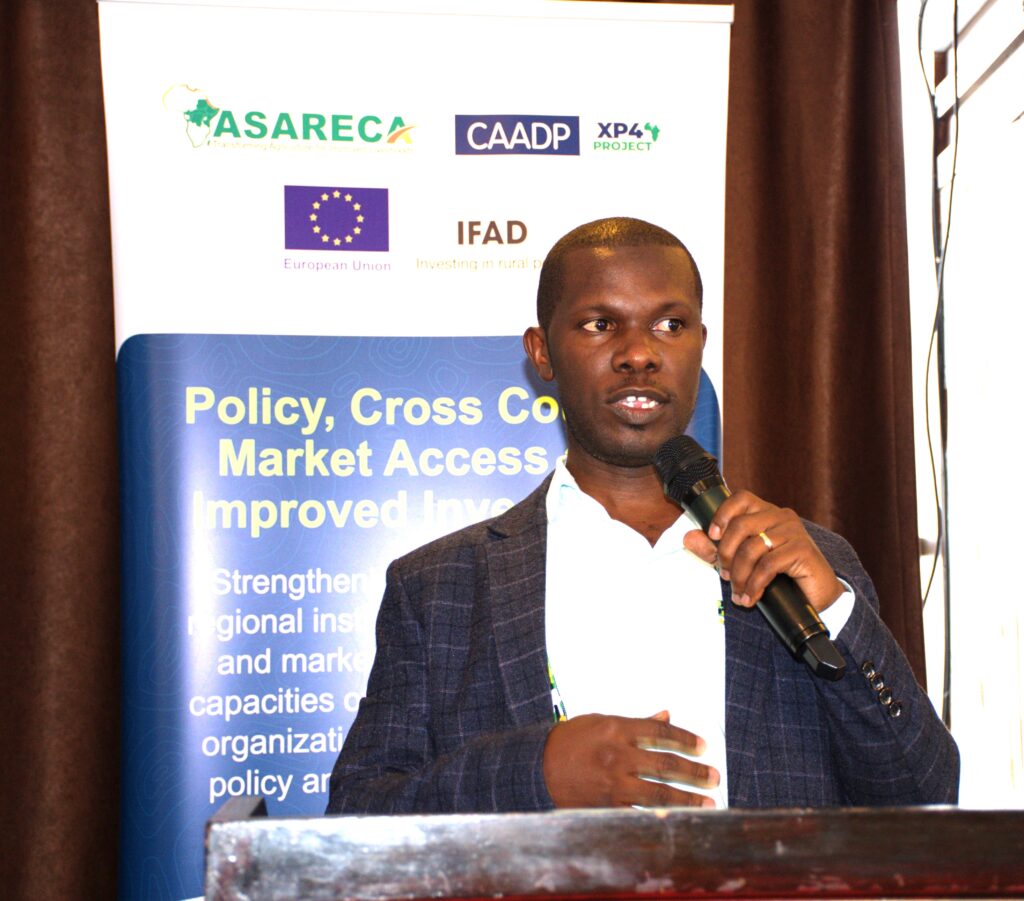
“This policy management tool comes in at that level, where, if at all, there is an existing policy that has been set up, we need to evaluate that process, either at the time when it has been completed or when it is under implementation or when it is reaching its end of life,” Ssebwana opined.
Experts attending the workshop also underscored the strategic importance of Kenya’s agroecology policy in balancing agricultural transformation with sustainability.
Tim Njagi, Spatial Modelling Specialist at the Africa Network of Agricultural Policy Research Institutes (ANAPRI), said the strategy is essential for ensuring agricultural growth does not compromise natural resources.

“When you look at our development goals, we want to grow agriculture, we want to transform agriculture, but it has to be sustainable. So, the agroecology strategy basically comes to help us in ensuring that even as we are pursuing transformation, we are doing it in a way that will be sustainable, not just for this generation, but for future generations. Opined Njagi. “This training deepens the understanding of what is contained in the strategy. The challenge we have in many African countries is that policy processes take a long time, from the time you start developing your policy to the time it’s enacted and you start implementation.”
Kenya’s National Agroecology Strategy aims to support sustainable food systems by promoting environmentally sound agricultural practices while addressing food security, climate resilience, and long-term economic development.
The Nairobi training marks a critical step in operationalizing the strategy by equipping institutions with practical tools for implementation oversight, accountability, and adaptive policy management.
As Kenya advances its agroecology agenda, the collaboration between government institutions, regional bodies like ASARECA, and development partners is expected to play a pivotal role in ensuring the strategy achieves its intended impact and contributes to broader agricultural transformation across Eastern and Central Africa.