

By Kimuri Mwangi
The Kenyan Government has lifted the suspension on the registration of new Savings and Credit Cooperative Organisations (SACCOs), introducing tougher requirements aimed at restoring confidence, improving governance, and ensuring only financially stable institutions enter the cooperative financial sector.
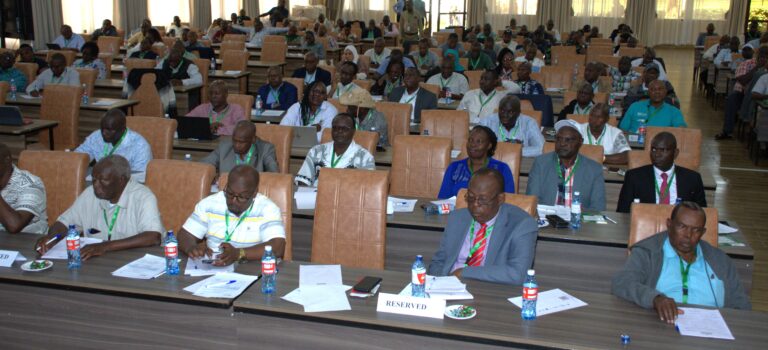
Commissioner for Co-operative Development David Obonyo announced the move during the launch of preparations for this year’s International Co-operative Day celebrations, saying the temporary freeze had allowed a technical committee to comprehensively review the legal and operational framework governing SACCOs in Kenya.
The suspension, which took effect in May last year, followed governance and operational challenges in several institutions, including Kuscco, Metropolitan SACCO, and Ushuru SACCO, which exposed vulnerabilities within the sector.
“We felt as a ministry that we needed a technical team, a committee of experts, to review the legal framework of SACCOs in this country,” Obonyo said.
The committee, which included experts from both within and outside Kenya, has since submitted its report, paving the way for the resumption of registrations under stricter conditions.
Under the revised guidelines, any SACCO seeking registration must now demonstrate access to at least Sh1.2 million in operational capital before it can begin operations.
According to Obonyo, the requirement is intended to ensure that newly registered SACCOs have sufficient resources to establish proper structures, including maintaining physical offices, employing staff, acquiring office fixtures, and meeting operational costs without relying on members’ savings.
“We want SACCOs that can sustain themselves and protect members’ savings. Every SACCO must also have a physical office, staff, and proper operational structures. We want to register SACCOs that are viable, stable, and likely to continue, not SACCOs that we register and they fail to take off,” he said.
In addition to the capital requirement, new SACCOs must prove their ability to mobilise at least Sh10 million within their first year of operation. Obonyo explained that such a financial threshold would help guarantee sustainability by enabling SACCOs to generate adequate income from lending activities to meet administrative and operational expenses.
The Commissioner revealed that Kenya currently has approximately 14,000 registered SACCOs, but only about 4,000 regularly comply with the requirement to file annual returns. This low compliance rate has raised serious concerns over the operational viability of thousands of SACCOs currently on record.
“More than a significant number of these SACCOs have not filed annual returns, meaning they may not be viable,” Obonyo said.
He said the stricter registration conditions are designed to protect members’ savings by ensuring only institutions with strong financial and governance foundations are allowed to operate.
“We want Kenyans to be sure that when they put their money into a SACCO, that money is safe,” he added.
The Commissioner also defended the government’s directive requiring SACCOs with over 5,000 members to adopt a delegate system during Annual General Meetings (AGMs). He argued that AGMs involving tens of thousands of members often become unwieldy, limiting effective participation and meaningful deliberation.
Obonyo opined that they want quality meetings where members’ views are adequately represented. Under the proposed system, members would first discuss issues at grassroots levels before electing delegates to represent them at higher-level meetings. Obonyo maintained that the system would strengthen governance without undermining democratic participation.

Meanwhile, the Commissioner said that the proposed Co-operative Bill currently before Parliament is undergoing mediation between the National Assembly and Senate to resolve remaining disagreements, including term limits for cooperative officials.
He expressed optimism that the legislative process would be completed ahead of the national Ushirika Day celebrations on July 4 at Uhuru Park in Nairobi.
This year’s International Co-operative Day celebrations will be held under the theme “Cooperatives for a peaceful world,” highlighting the role of cooperatives in fostering economic empowerment, peaceful coexistence, and social cohesion.
Cooperative Alliance of Kenya (CAK) Chief Executive Officer Daniel Marube described cooperatives as a cornerstone of Kenya’s economy, noting that approximately 20 million Kenyans belong to at least one cooperative society or SACCO.
“About 75 per cent of the population depends directly or indirectly on cooperative activities. Cooperatives have provided affordable financial services to millions of Kenyans and improved livelihoods across the country,” Marube opined.
He noted that cooperatives have significantly expanded access to affordable financial services, particularly for low-income earners, while also supporting housing, small businesses, and agricultural productivity.
Marube added that agricultural cooperatives continue to play a crucial role in helping smallholder farmers aggregate produce, secure better market prices, and enhance food security. Marube emphasized the need to modernize the cooperative movement to attract younger generations, particularly through worker cooperatives and technology-based innovations.
“We want young people to see cooperatives as vehicles for economic empowerment and employment creation,” he said. He said CAK has already initiated youth-focused cooperative models aimed at increasing participation among younger Kenyans.
While supporting the delegate system, Marube urged the government to allow more time for public participation and member education, especially among rural and agricultural cooperatives. “It is a wonderful idea, but members need proper education so that they understand the benefits and do not feel excluded.”
He suggested that instead of imposing immediate deadlines, the government should provide a transition period of up to two or three years for cooperatives to fully adopt the system. Marube also encouraged smaller SACCOs to explore mergers and strategic partnerships to enhance sustainability, competitiveness, and governance standards.
The resumption of SACCO registration under tighter controls signals a major policy shift aimed at reforming one of Kenya’s most critical financial sectors. With millions of Kenyans depending on cooperatives for savings, credit, farming support, and business development, the government’s renewed focus on accountability, sustainability, and governance is expected to shape the future of the cooperative movement for years to come.