
By Kimuri Mwangi
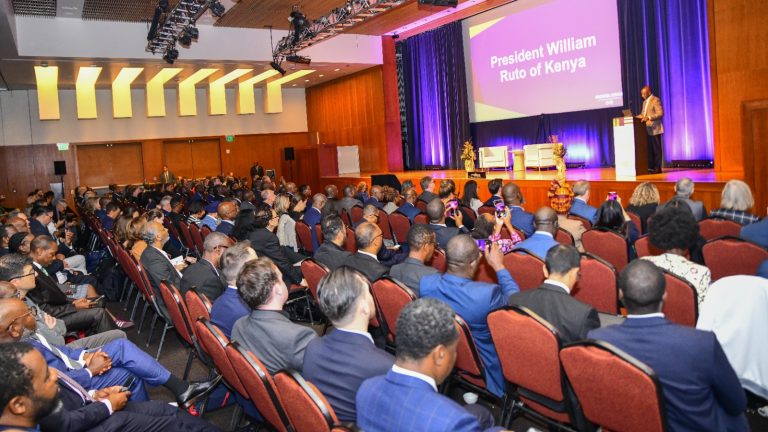
Kenya and Sweden have renewed their commitment to strengthening collaboration in the bioeconomy sector during a two-day Kenya–Sweden Bioeconomy Business and Innovation Fair held in Nairobi. The event brought together enterprises, researchers, and policymakers from both countries to explore partnerships, promote technology exchange, and showcase bio-based innovations.
The fair was organised by the Stockholm Environment Institute (SEI) and the Swedish government in partnership with Business Sweden and the Kenya Private Sector Alliance (KEPSA). It is part of the Advancing Bioeconomy Development in Kenya (ABDK) project, supported by Sida.
Swedish Ambassador to Kenya, Håkan Åkesson, said the event underscored a shared passion for bioeconomy between the two nations. “It’s a real pleasure to join you as we strengthen cooperation between Sweden and Kenya in the field of bioeconomy,” he said. He noted that Kenya’s rich biological resources, innovative entrepreneurs, a strong industry and a fast-growing research base, combined with Sweden’s long experience in bio-based resource use, created strong potential for collaboration.
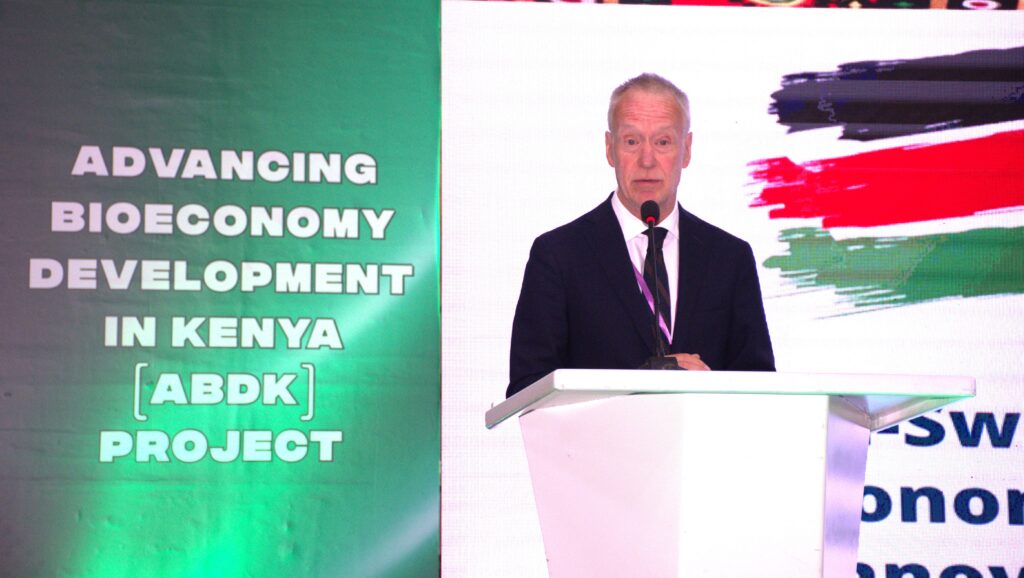
Åkesson said Sweden was committed to supporting the development of bioeconomy cluster roadmaps that identify priority value chains, guide investment and connect actors from research, industry and government. He highlighted the importance of partnerships, adding, “Together, we can scale Kenya’s bioeconomy, create green jobs, support industrialisation and drive sustainable growth.” He pointed to the WoodLife project as an example of co-creation, promoting timber construction and wood innovation for climate-smart urban development.
Kenya’s Permanent Secretary for Industry, Dr. Juma Mukhwana, said the ABDK project aligns closely with national development priorities. “This project serves as a catalyst for Kenya’s sustainable industrial transformation by contributing to national goals on job creation, food security and inclusive growth,” he said.
Reflecting on his agricultural research background, he noted that despite numerous islands of success in technologies and innovations, they often “were not speaking to each other” or scaling fast enough. He said the partnership with Sweden offered lessons on developing and scaling technologies that keep pace with today’s demands.
Mukhwana outlined government initiatives to strengthen manufacturing, including promoting local assembly of machinery, supporting technology transfer, and rolling out county aggregation and industrial parks to expand agro-industrial processing and provide affordable industrial spaces. “All you need is pluck and play,” he said of the new facilities, noting that the government will provide equipment for manufacturers to “pay as you go.”
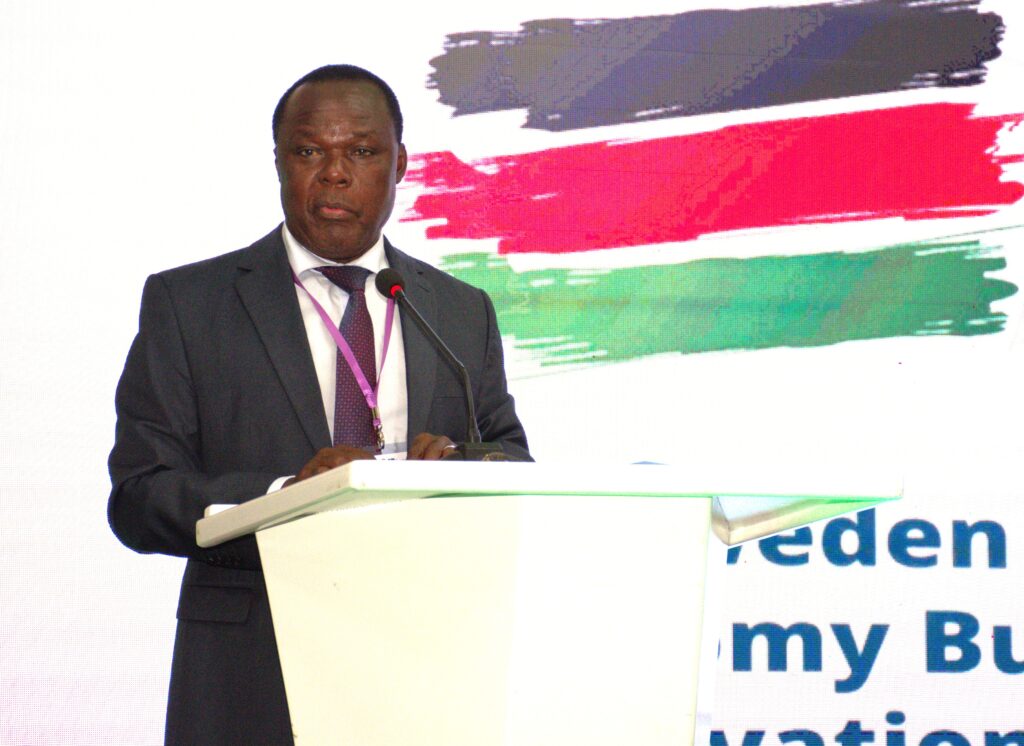
He highlighted Kenya’s expanding market access through the East African Community, COMESA, the African Continental Free Trade Area, and bilateral agreements with the EU, UK, UAE and the U.S. He urged young entrepreneurs to think big, stressing that Africa’s industrialisation must be driven by Africans themselves.
Mukhwana emphasised that Kenya and Sweden already enjoy a longstanding trade partnership, with more than 50 Swedish companies operating locally. He said the fair would deepen cooperation in green and circular economy development, support the commercialisation of bio-based innovations, and contribute to implementing Kenya’s national bioeconomy strategy. “We are very proud of the work that you are doing,” he told innovators, noting that institutions such as the Kenya Development Corporation were ready to finance manufacturers.
SEI Africa Centre Director Niall O’Connor described the fair as a very important moment in the ABDK project, which began earlier this year with support from the Government of Sweden. He said the project aims to promote Kenya–Sweden bioeconomy partnerships that facilitate technology exchange, attract more investments, boost innovation, and promote industrialization.
O’Connor recounted the project’s progress, from initial workshops with KEPSA to nationwide mapping of Kenyan bio-enterprises and the formation of four clusters: value addition, bio-based agricultural inputs, bio-based industrial development, and sustainable bioenergy. Between August and November, he said, the clusters met to identify challenges, refine roadmaps, and build connections. “Some have made friends; others have met customers; and the majority have found a community,” he said.
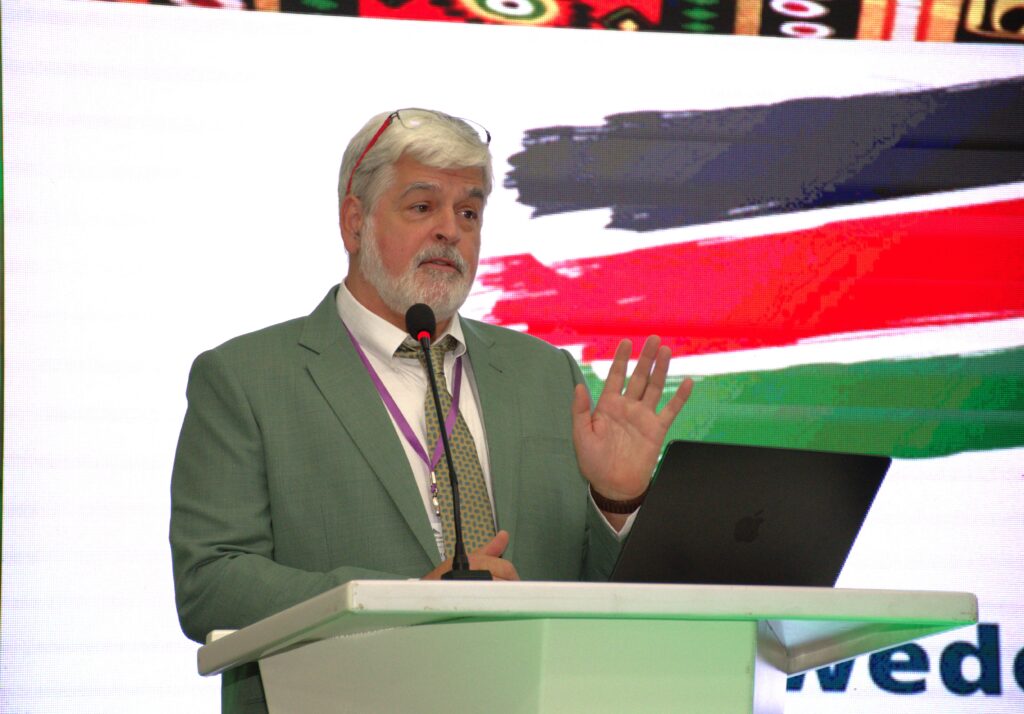
He urged participants to take full advantage of the fair’s business-to-business sessions. “Why does Kenya or even Sweden have to invest time, effort, and resources into the bioeconomy?” he asked. “First, climate resilience, food security, industrial growth and job creation. And that is how we can collectively alleviate poverty. In terms of job creation, bioeconomy is part of the answer to one of Africa’s biggest questions today on how to create meaningful and dignified employment for our youth. We need to unlock value chains, support enterprise growth with capital and enabling policies, and promote accelerator and incubation programs.”
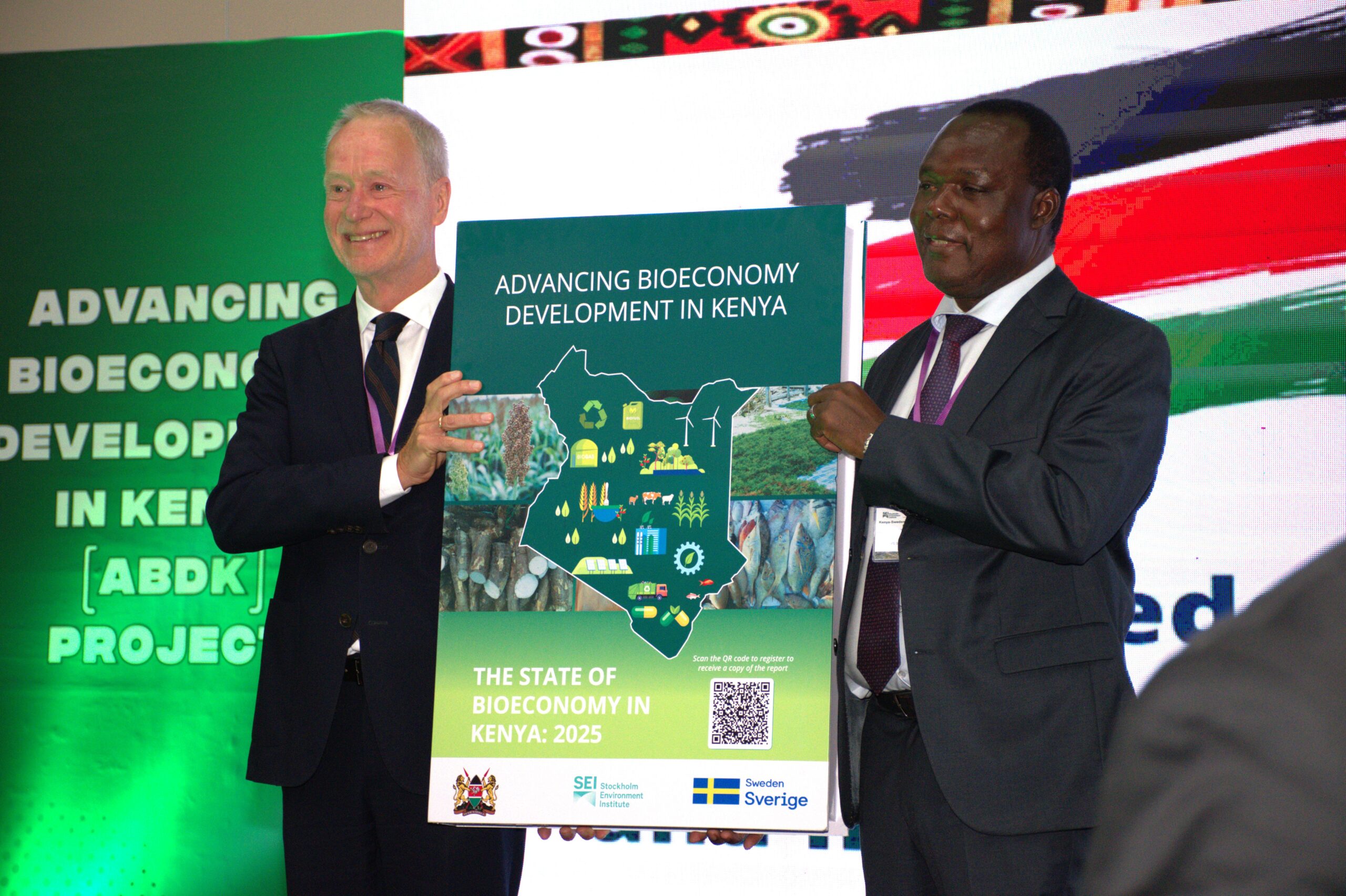
O’Connor noted that bioeconomy is a priority in SEI’s 2025–2029 Strategy and that the ABDK project exemplifies this commitment. He highlighted SEI’s role in producing the State of the Bioeconomy in Eastern Africa reports, which informed the forthcoming State of the Bioeconomy in Kenya report launched during the fair.
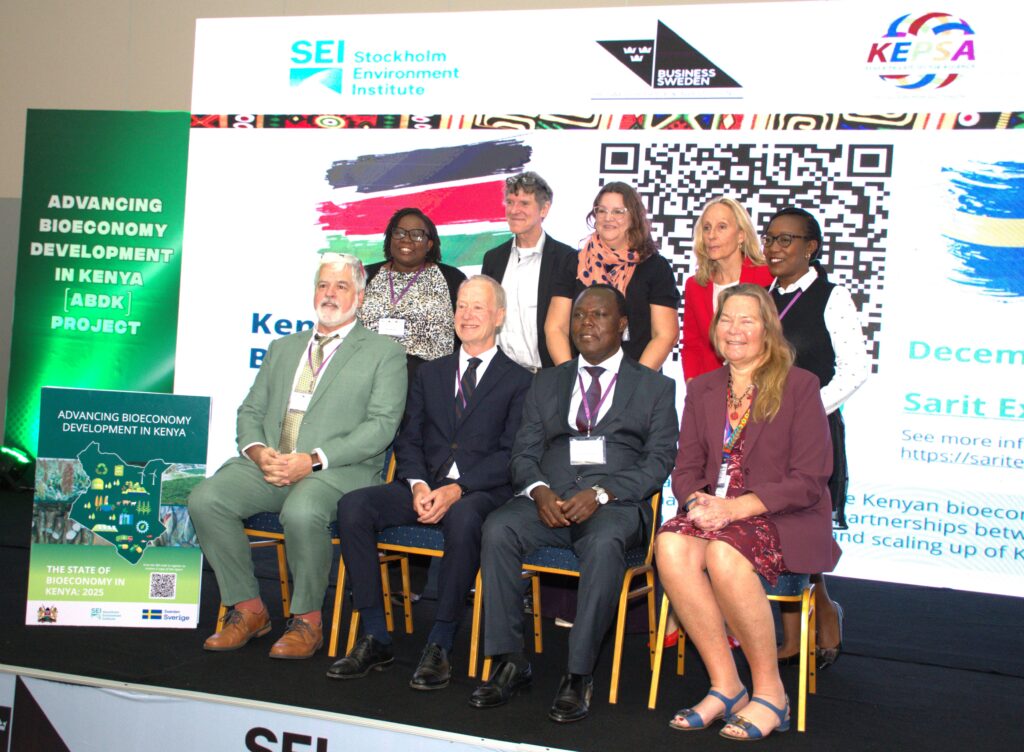
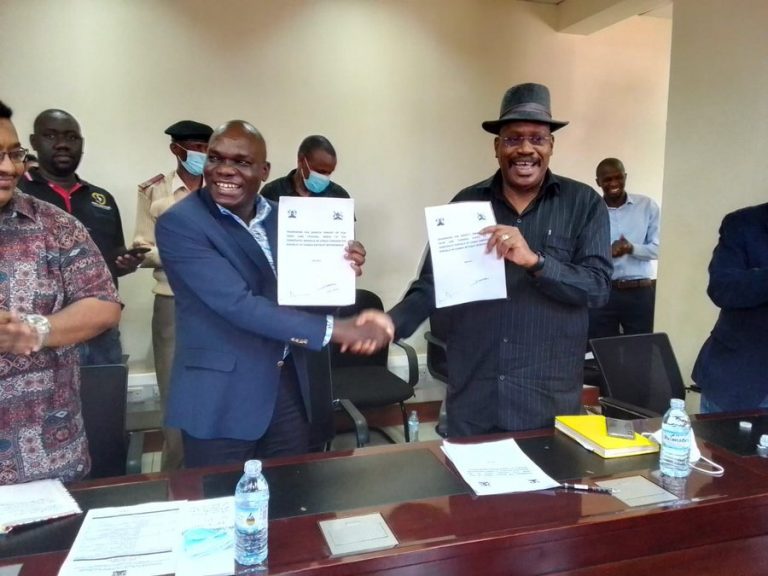
He stressed that bioeconomy development depends on strong partnerships across government, academia, the private sector, and civil society. “No country builds alone; no enterprise scales alone; no institution succeeds alone,” he said. O’Connor also announced that SEI would sign a Memorandum of Cooperation with Kenya’s State Department for Industry.
Looking ahead, he said ABDK provides a foundation for strengthening Kenya–Sweden bilateral relations and for advancing bioeconomy and other development goals. “This platform becomes a perfect place to ignite new ideas and collaborations,” he said.