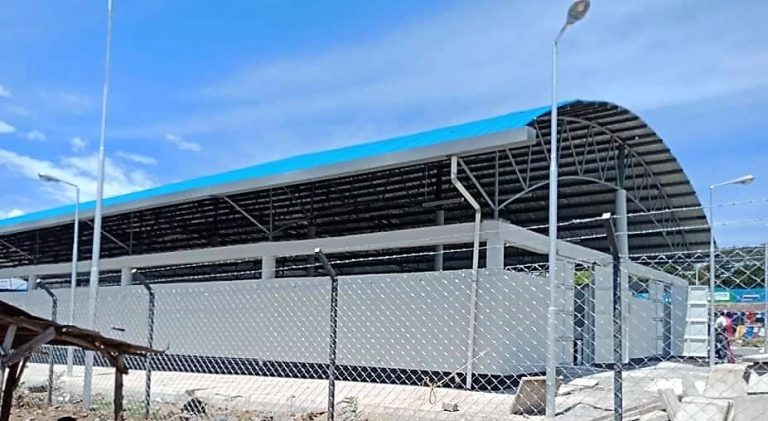

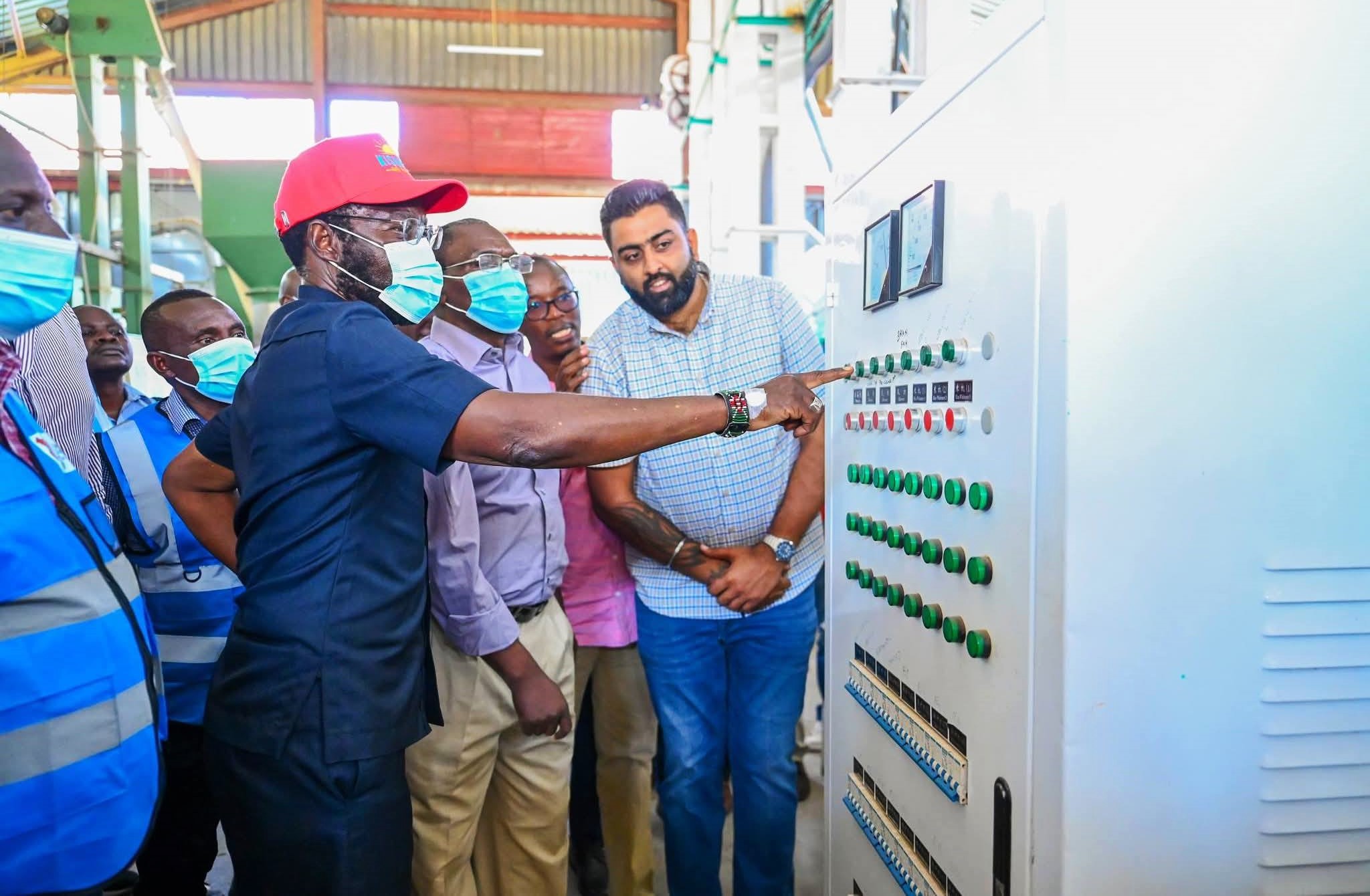
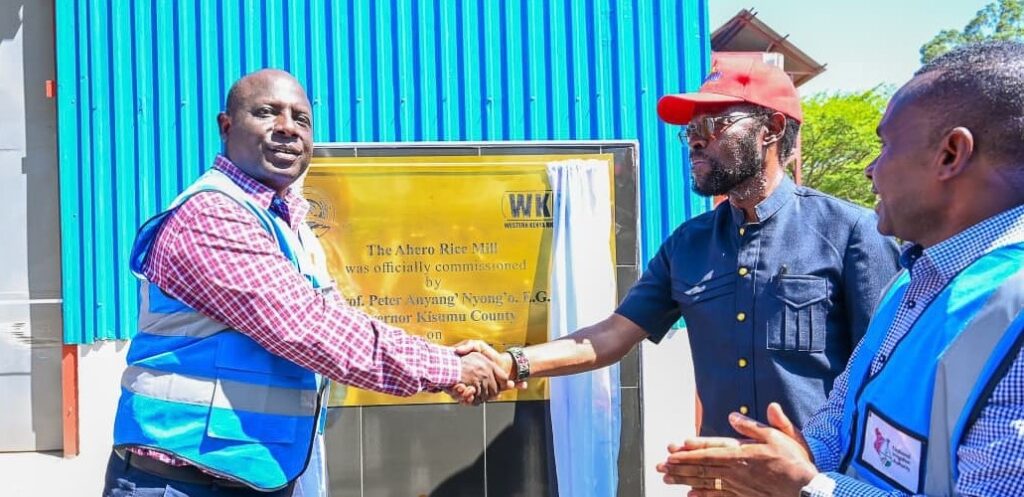
The agricultural landscape of Western Kenya is poised for a major overhaul following the commissioning of a state-of-the-art rice milling facility by the Kisumu County government at the Ahero Irrigation Scheme. Officials and partners hailed the project as a critical step toward enhancing food security and spurring regional economic growth.
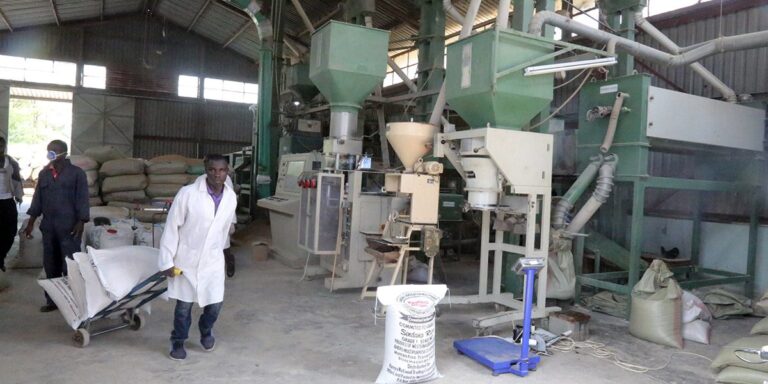
The new mill, featuring an ultra-modern, multistage design, boasts a formidable output capacity of 2.5 metric tons per hour, equating to approximately 60 tons per day. It is equipped with advanced automation, high-efficiency process design, and stringent quality control technologies, all aimed at producing high-grade rice that meets international standards.
Speaking at the commissioning, Kisumu County Governor Anyang’ Nyong’o declared the project a momentous achievement for the region.
“This is a milestone that represents a bold and strategic investment in our farmers and the economy,” Prof Nyong’o remarked. “It offers a reliable, modern processing centre right at the heart of the production zone.”
The Governor highlighted that the new facility would significantly improve milling efficiency and reduce critical post-harvest losses, ultimately enhancing the market value of Ahero’s rice. He noted that the mill arrives at a crucial time as the government intensifies efforts to boost domestic production and lessen dependence on imported milled rice.
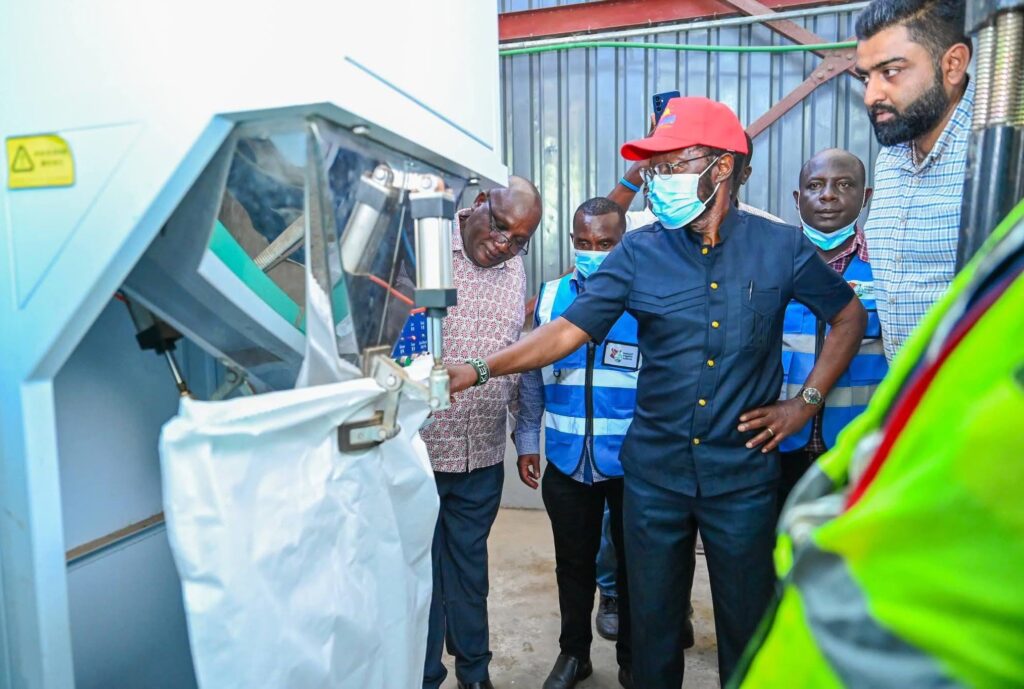
Prof Nyong’o emphasized the facility’s role in ushering in a new era for local agriculture. “Today’s commissioning exercise of a rice mill here marks a shift from primary production to value addition; From subsistence farming to commercial agriculture; from vulnerability to competitiveness.”
This modernization, the Governor added, is expected to enable the rice to compete effectively both locally and internationally, while simultaneously creating significant employment opportunities for young people across the entire rice value chain, from production and aggregation to packaging and distribution. He also acknowledged the lifelong dedication and resilience of rice farmers in the face of fluctuating market trends and climate challenges.
The County boss pledged continued governmental support, including the provision of extension services, access to credit, timely input provision, and modernized irrigation systems to boost yields. He assured farmers that the mill belongs to them and acknowledged the collaborative efforts of the National Irrigation Authority (NIA), Development Partners, the Private Sector, and the County Department of Agriculture for making the vision a reality.
The Governor underscored the need for close collaboration between Kisumu County Government, the National Irrigation Authority (NIA), and the private investor, Uplands Crops Ltd, to ensure local farmers reap maximum benefits.
The mill’s journey, which was conceptualized in 2019 following a devastating hailstorm, was recounted by Kenneth Onyango, the CECM for Agriculture, Irrigation, Livestock, Fisheries, and Blue Economy. He passionately appealed to farmers to shun middlemen and brokers, promising that their rice would be milled, packaged, and supplied directly to supermarkets in Kenya.
To solidify support, the department is rolling out an E-voucher farm input program to subsidize rice seeds, with the County Government covering 60% of the cost. Additionally, subsidized ploughing services are being offered, with six tractors already stationed in Rabuor. The CECM also urged the revival of cooperatives, describing them as the essential vehicle for accessing government and donor support.
Investor Sunil Shah, who was responsible for fixing the mill within months, requested the Governor’s support to ensure good income for farmers. He also proposed the rehabilitation of the old mill to enable both facilities to operate 24 hours a day, outlining a vision for an even bigger market.
NIA Board Chairman Eng. Gilbert Maluki encouraged farmers to organize themselves into strong cooperatives in order to fully access support from the National Government, County Government, and other development partners. NIA CEO Eng. Charles Muasya reaffirmed the Authority’s unwavering commitment to addressing farmers’ concerns and ensuring all irrigation schemes remain productive and fully functional throughout the year.