
By Kimuri Mwangi
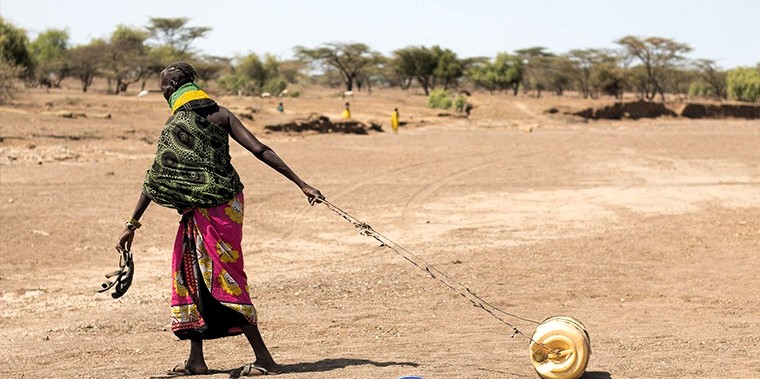
Kenya’s northern and arid counties are sliding deeper into crisis, with humanitarian actors warning that the country is edging dangerously close to catastrophic outcomes if urgent action is not taken.
The ASAL Humanitarian Network (AHN), a coalition of local and national humanitarian organizations working across Kenya’s Arid and Semi-Arid Lands (ASALs), said Kenya’s northern and arid counties are entering a dangerous new phase of drought and food insecurity, with 3.27 million people currently facing high acute food insecurity (IPC Phase 3 and above) across the Arid and Semi-Arid Lands (ASALs). That figure represents 18.5 percent of the affected population, with nearly one in five people now in urgent need of assistance.
Of those affected, AHN said 2,873,380 people are classified in Crisis (IPC Phase 3), and 399,850 people are already in Emergency (IPC Phase 4), one step below famine conditions. Although no population is presently classified in Catastrophe (IPC Phase 5), the expansion of Emergency-level food insecurity signals a rapidly narrowing margin before famine risk thresholds are crossed.
AHN warned that the situation could deteriorate sharply within weeks. “If the upcoming March–May 2026 long rains underperform, projections indicate that the number of people in crisis or worse will rise to 3.69 million, with emergency cases increasing to 607,437 people. In such a scenario, 20 percent of the ASAL population would face high acute food insecurity.”
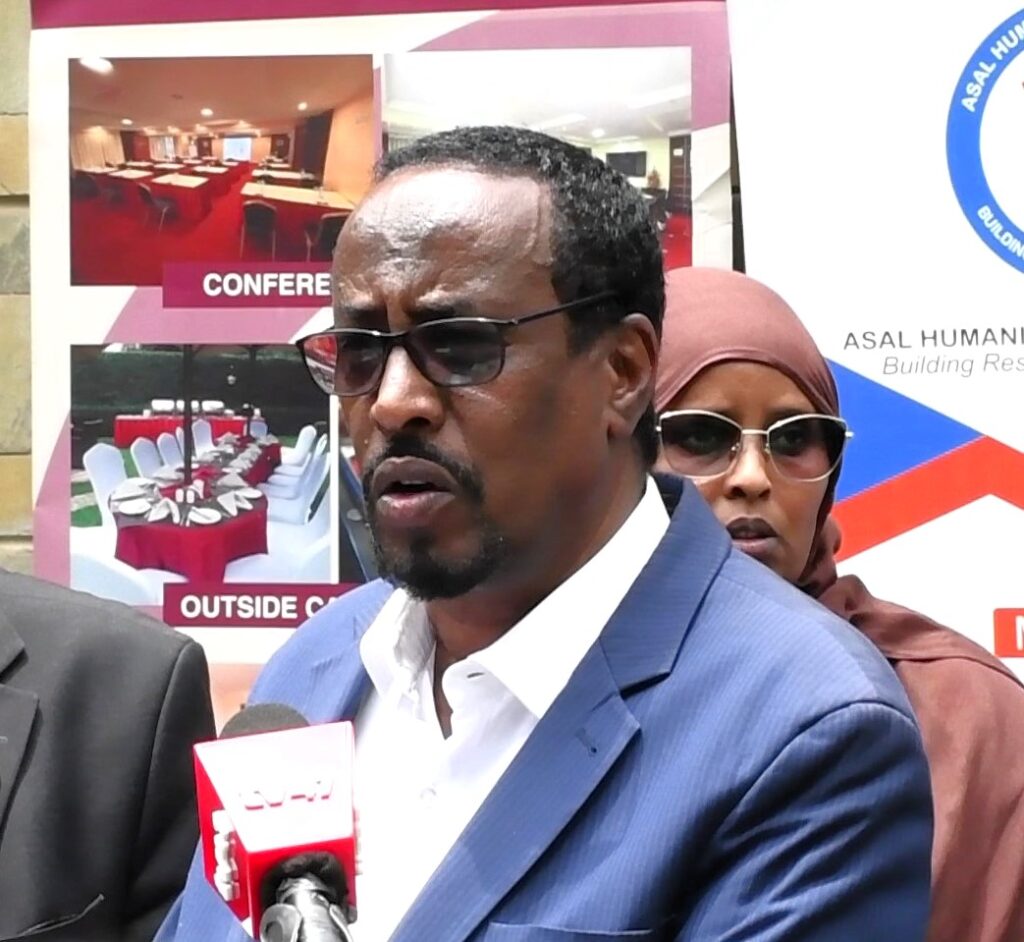
Vice Chair Mohamed Arai echoed the alarm, stating, “Kenya’s Northern and other counties are entering a very dangerous new phase of drought and food insecurity, with 3.27 million people currently facing high acute food insecurity across the ASAL areas. That figure represents 18.5% of the affected population with nearly one in five people now in urgent need of assistance.”
Mandera County illustrates the depth of the emergency. Following the poor performance of the October–November–December 2025 short rains, the county has entered the Alarm phase of drought. More than 335,000 people require humanitarian assistance, and the nutrition situation has reached the highest severity classification.
AHN reported that Mandera is classified in IPC Acute Malnutrition Phase 5 (Extremely Critical), the most severe category under the IPC Acute Malnutrition scale.” An estimated 86,360 children aged 6–59 months require treatment for acute malnutrition in Mandera, including 20,165 suffering from Severe Acute Malnutrition. More than 17,000 pregnant and breastfeeding women and girls require urgent nutrition support.
“Indeed, as we speak, Mandera, North Horr and Turkana South are already in IPC-5, which of course is famine. The situation could deteriorate within weeks if we don’t get the rains. And even if we get the rains, I think it will not be of any use at this particular time. If this issue is not addressed accordingly, then there is the likelihood of human beings losing their lives. Already, the local community has lost a significant number of their assets, that is, their livestock, and it is hitting them hard,” opined Arai. He described the situation as escalating, noting that the number of children requiring treatment reflects a significant increase compared to the mid-2025 assessment.
Nationally, the crisis is intensifying. According to AHN, across Kenya, 810,871 children aged 6–59 months now require management of acute malnutrition. Within ASAL counties alone, nearly 500,000 children require treatment, and more than 113,000 are classified as Severe Acute Malnutrition cases.
Patrick Katelo, CEO of PACIDA, an AHN member organization, said the country is still reeling from successive droughts. “We all understand that we’ve just come out of the only drought of its kind in 40 years, and of course, we are still far from recovering from the previous droughts of 2021, 2022, and 2023. Later, we experienced a short rain failure in 2024 and again in 2025. For pastoralists, who depend on their livestock as their mainstay and livelihood, this is devastating. The body condition of their livestock is deteriorating, and household food security is now under a very serious threat. You must have seen the reports circulating from these different counties, showing that malnutrition rates are rising sharply. With some areas approaching IPC Phase 5, which is next to grave, we are appealing to all people of goodwill to urgently look into this situation and help save the lives at risk.”

The crisis extends beyond food, with Katelo describing a worsening water emergency: “All over social media, you hear about the water crisis. And here, we’re not even talking about quality; quality isn’t the issue. We’re talking about quantity and access. In most of these pastoralist communities, access hardly exists. Always on the move, crossing borders, whether international or local, they are constantly searching for water.”
Competition over dwindling resources is also fuelling tensions with fights over water points and grazing rangelands, which are now depleting at an alarming rate.
Ahmed Ibrahim, Convenor of AHN, painted a stark human picture: “Imagine a mother who is breastfeeding, imagine a child under five that’s not getting basic nutritional value food, imagine somebody who has to trek more than 14 to 15 kilometres to get the basic necessity of water.”
He recounted meeting a lady with a donkey cart who left home at sunrise and was still returning with water at five in the evening.
Refugee-hosting camps are also under pressure. AHN reported that 430,000 people, 60 percent of the camp populations, are in Crisis or Emergency, including 186,456 people in Emergency conditions, adding that any disruption in assistance pipelines could rapidly escalate severity.
Despite ongoing interventions, humanitarian leaders say funding remains inadequate. AHN acknowledged that Significant response efforts are underway, including the National Drought Management Authority (NDMA) coordination mechanisms and government allocations.
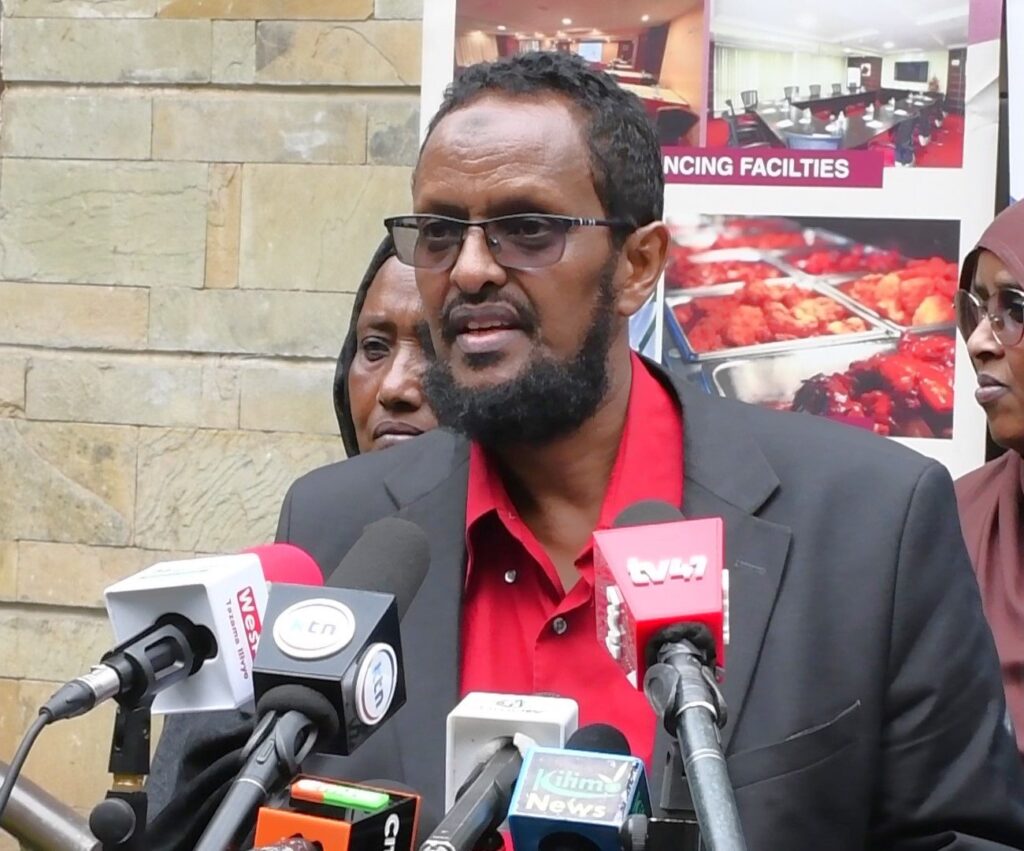
Ibrahim questioned whether sufficient resources had been set aside in advance. “In the normal process of government planning, we are supposed to be putting aside two percent of the three trillion Kenyan budget. We should be talking about 60 billion. I think the government has already responded yes, but it’s not enough to really cover the cost.” He added that AHN’s own response plan targets only a fraction of those in need. “We are saying for this crisis, where we’ll be maybe dealing with five percent or ten percent caseload, we are talking about 32 million euros, and that is just around ten percent of the caseload.”
Arai stressed the need for preparedness: “If we had only put in place 2% of that saved for emergencies, I think we would not have had that crisis. This quick response of emergency will not take us anywhere, and we need to adopt a system where we can have a better approach, proactiveness.”
AHN has activated a coordinated, locally led early response aligned with the AHN Drought Flash Appeal (January–July 2026), starting with Mandera. The initiative aims to translate early warning into early action, strengthen coordination and complementarity, align interventions with county Disaster Risk Management and response systems, and generate operational evidence to inform scale-up.
The response is being implemented by local organizations including NAPAD, PACIDA and Mandera Women for Peace, leading interventions across water access, food security, nutrition, protection and community engagement.
AHN warns that time is running out. “Kenya is not yet in famine. But with nearly 400,000 people already in Emergency conditions and projections rising to 3.69 million people in crisis or worse if rains fail, the risk trajectory is unmistakable. We are on the brink of a catastrophe happening in the ASAL, and the time is now. If we are not there for the children today, tomorrow then we will not have the children.”