
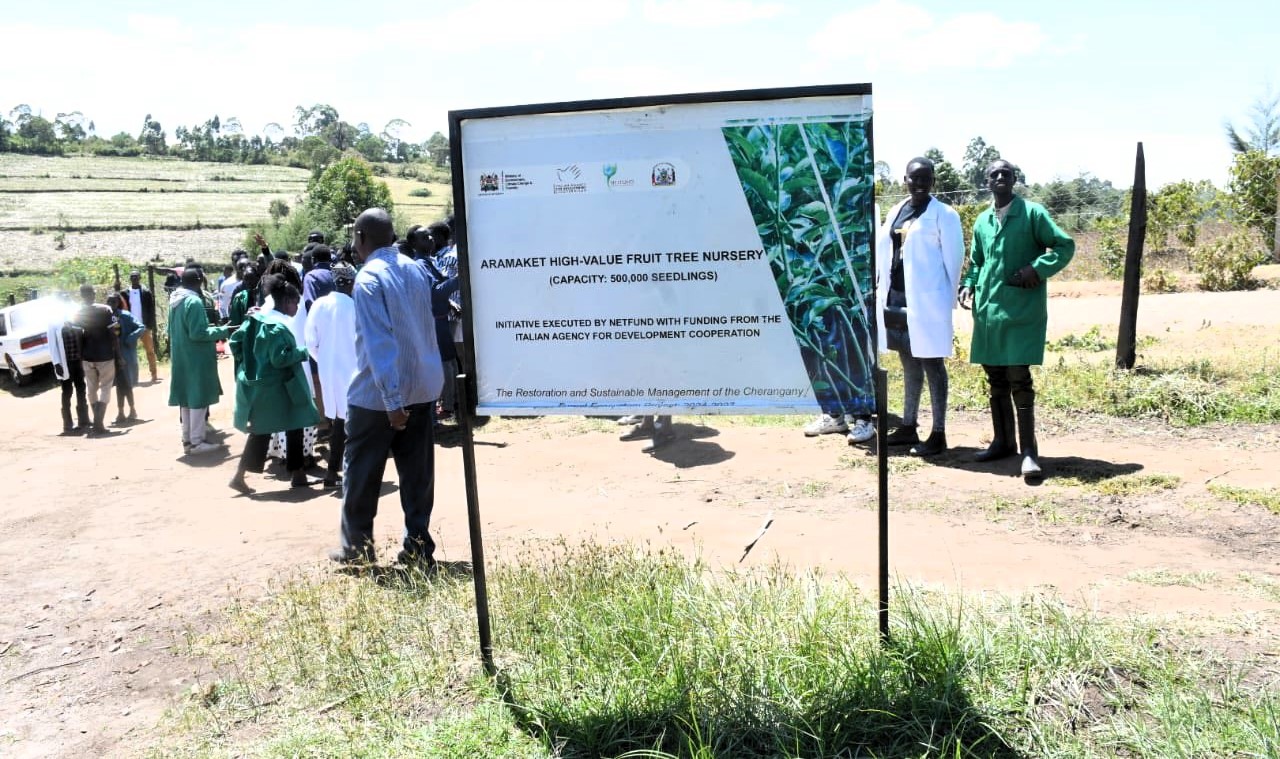
West Pokot Governor Simon Kachapin visited the Aramaket fruit tree nursery to assess progress made since the project was launched last year, terming it a key pillar in promoting sustainable livelihoods and environmental conservation in the region.
The nursery is part of the wider Cherangany Forest Ecosystem Restoration Programme, funded by the Italian Government through the Italian Agency for Development Cooperation (AICS) and implemented by the National Environment Trust Fund (NETFUND) in partnership with the county governments of West Pokot and Elgeyo Marakwet, the Kenya Forest Service (KFS), Nature Kenya and local communities.
Launched in early 2025, the four-year initiative focuses on restoring degraded land through agroforestry and sustainable farming practices. The programme targets the restoration of about 92,000 hectares of the Cherangany ecosystem and is expected to benefit more than 270,000 households by increasing tree cover, strengthening climate resilience and supporting rural incomes.
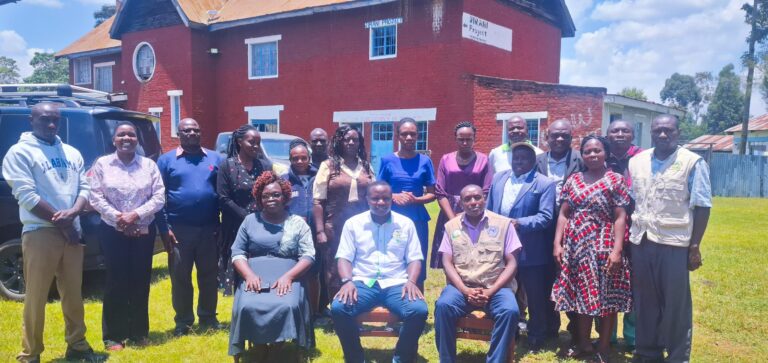
During the visit, Governor Kachapin was accompanied by Italian Ambassador to Kenya Dr. Vincenzo Del Monaco, Principal Secretary in the Ministry of Environment Dr. Eng. Festus K. Ng’eno, and representatives from NETFUND and other government institutions.
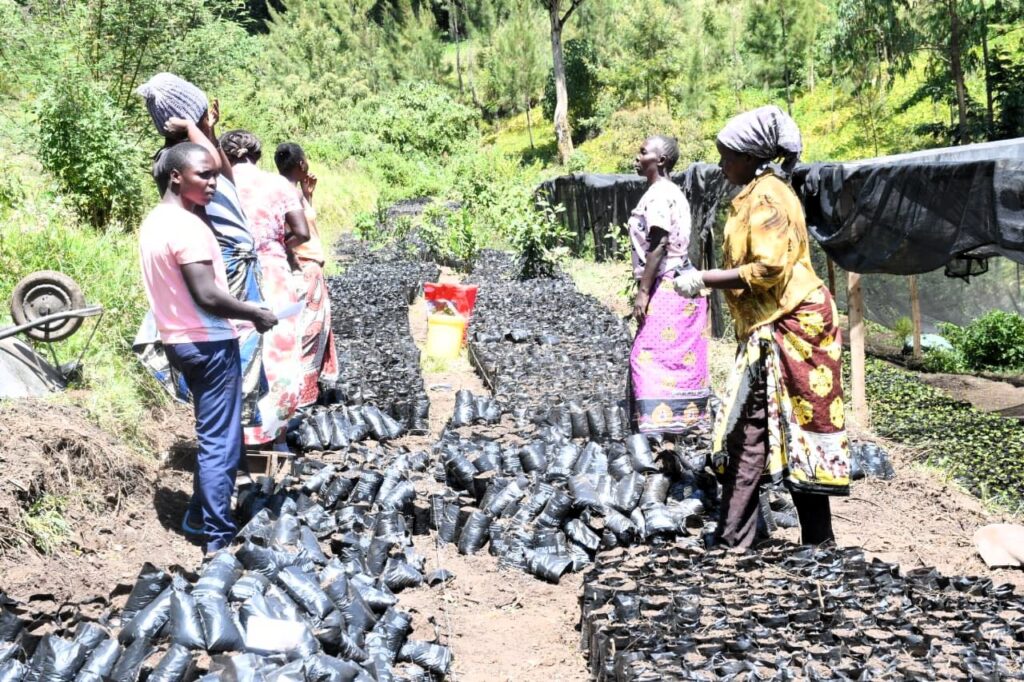
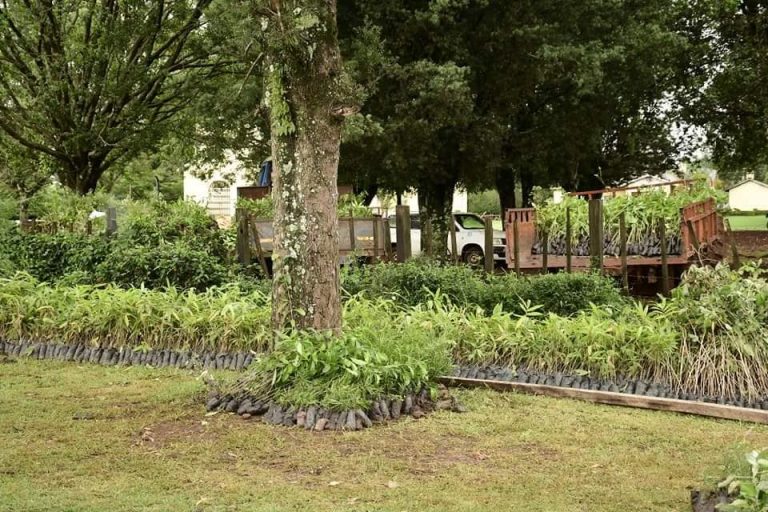
The fruit tree nursery is producing grafted seedlings, including mangoes and avocados, alongside cash crops such as coffee and macadamia. The grafting process is intended to ensure faster fruiting, consistent quality, improved disease resistance and better adaptation to local conditions, while maintaining manageable tree sizes for higher productivity.
Registration and vetting of community members participating in restoration activities and sustainable livelihood programmes is ongoing in Lelan, Siyoi, Weiwei and Sekerr wards in West Pokot County.
“The Ministry is open to such partnerships from development partners and county governments at the local levels to restore our degraded ecosystems to their original state caused by destruction and by the global climatic changes,” PS Ng’eno said, noting that the initiative aligns with the presidential directive to plant 15 billion trees by 2032.
Ambassador Del Monaco praised the collaboration between Kenya and Italy, saying it reflects a shared commitment to addressing tangible community challenges while delivering lasting environmental and economic benefits.
Beyond environmental restoration, the fruit tree nursery is creating employment through seedling production, farm management and maintenance, and eventual harvesting, providing both short-term and long-term job opportunities along the agricultural value chain. The initiative is also aimed at enhancing food security while conserving fragile ecosystems in the hilly, landslide-prone Cherangany region.
Lilian Kosgey, a local farmer and beneficiary of the project, said the nursery has already transformed her livelihood by providing employment and access to quality seedlings that sustain her income.
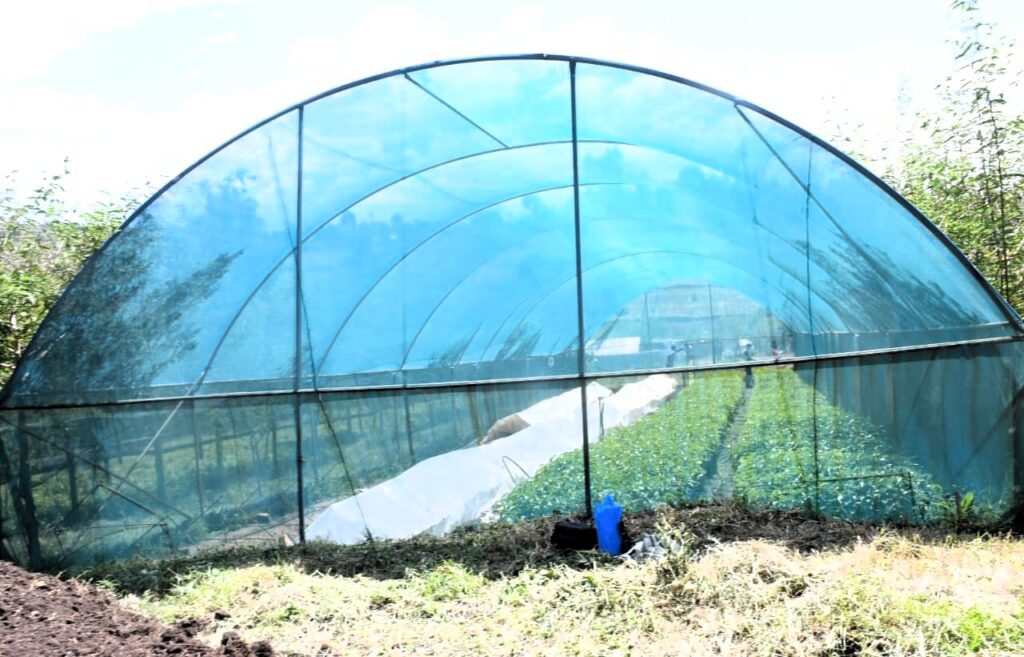
She noted that the fruit trees are fast-growing and of higher quality compared to indigenous varieties, adding that she expects to start benefiting from the harvest within a year.
Farmers, particularly youth, have been encouraged to register for the programme to receive free seedlings by meeting basic requirements, including registration with village representatives, securing land through fencing, cultivating the land and preparing planting holes.
With rising unemployment, officials said initiatives such as the Aramaket fruit tree nursery demonstrate how agriculture and agribusiness can serve as viable pathways to sustainable incomes while supporting environmental restoration.