
By Kimuri Mwangi
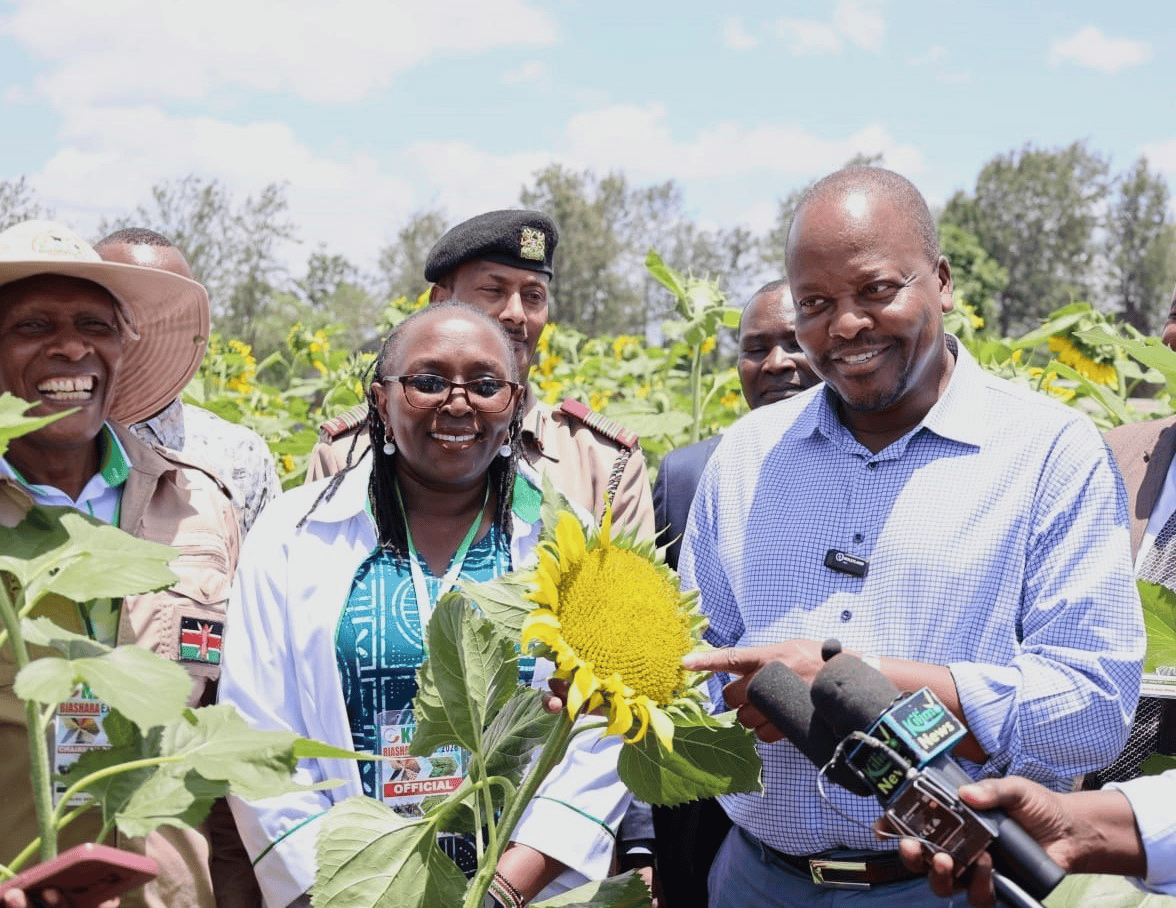
The government is intensifying efforts to promote the cultivation of oilseed crops such as soybean and sunflower as part of a broader strategy to increase agricultural productivity, encourage youth participation in farming and reduce the country’s reliance on imported edible oils.
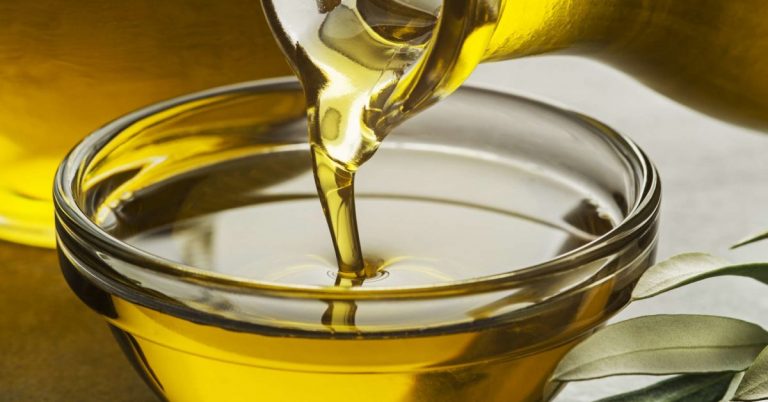
Kenya consumes about 600,000Mt of edible oils annually, where over 90–95% of this demand is met through imports, costing the country more than KSh 145B in 2022 alone.
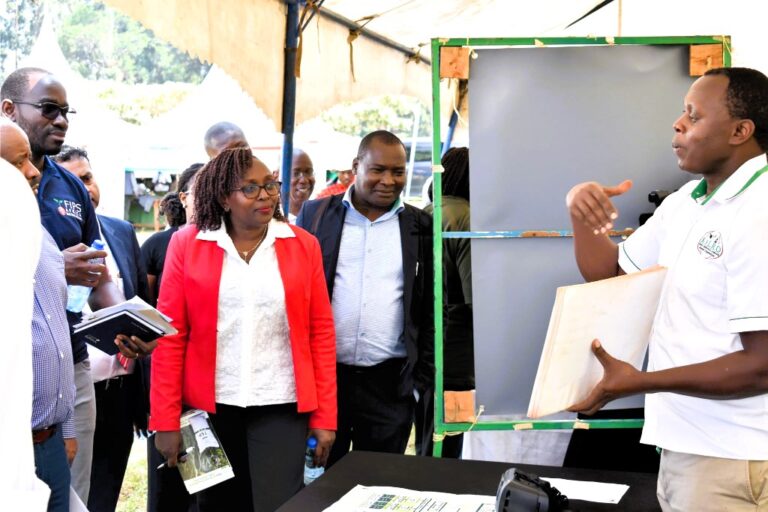
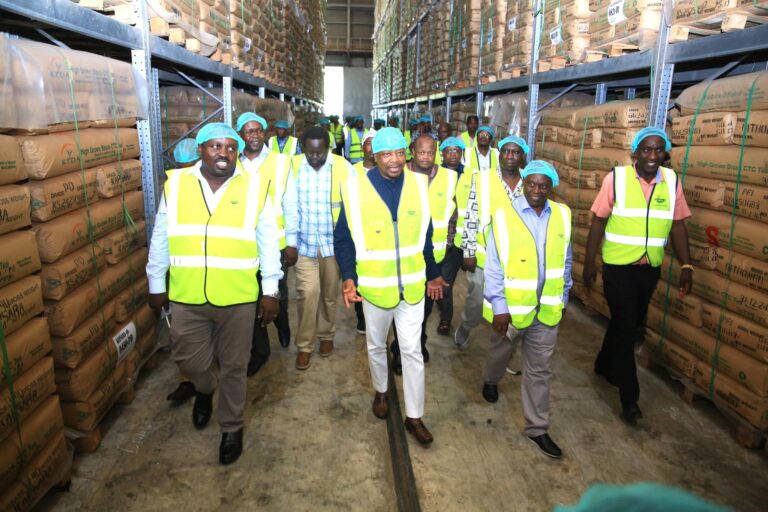
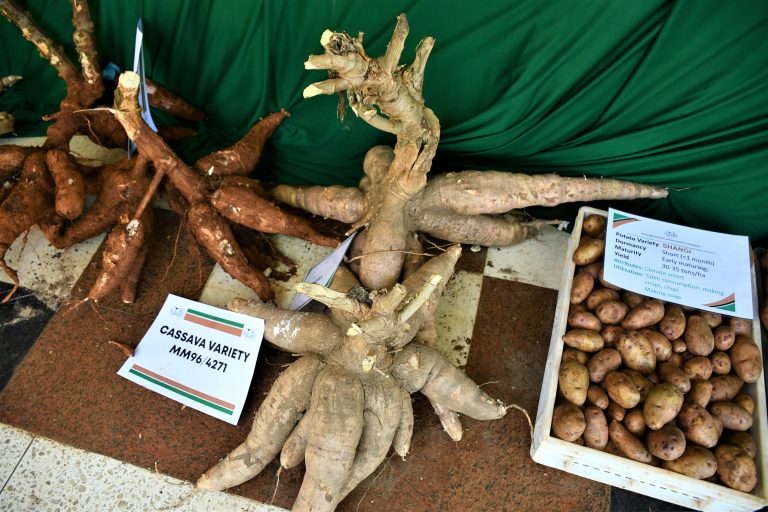
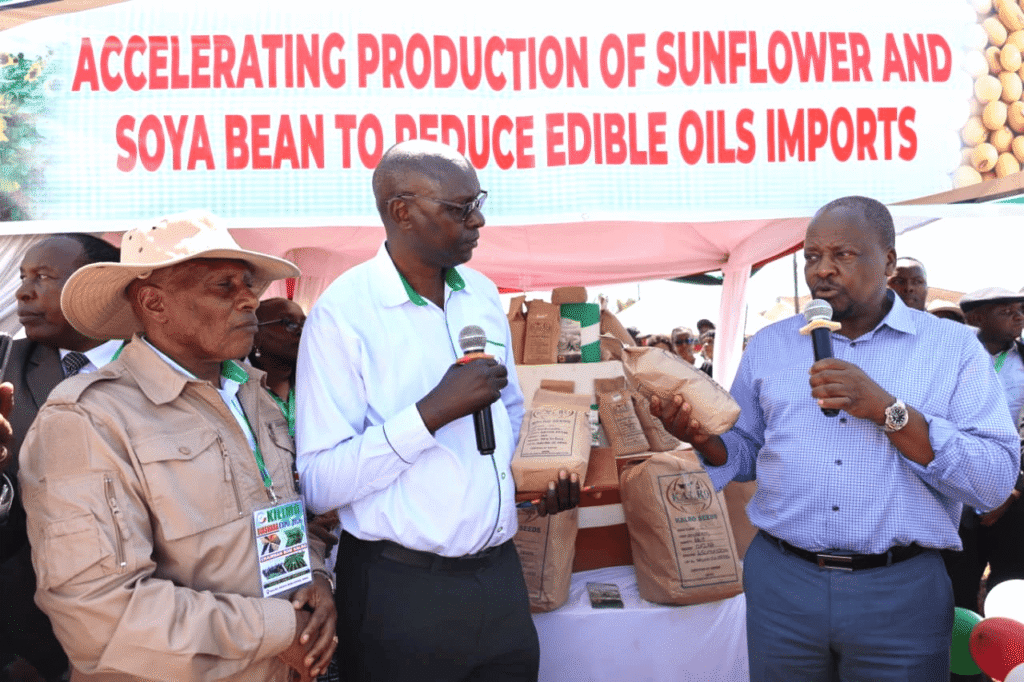
Speaking during the opening of the Kilimo Biashara Expo 2026 at the Kenya Agricultural and Livestock Research Organisation (KALRO) Seeds headquarters in Thika, Agriculture Cabinet Secretary Mutahi Kagwe said the government is working to ensure that agricultural research and innovation reach farmers directly to improve productivity and strengthen food independence.
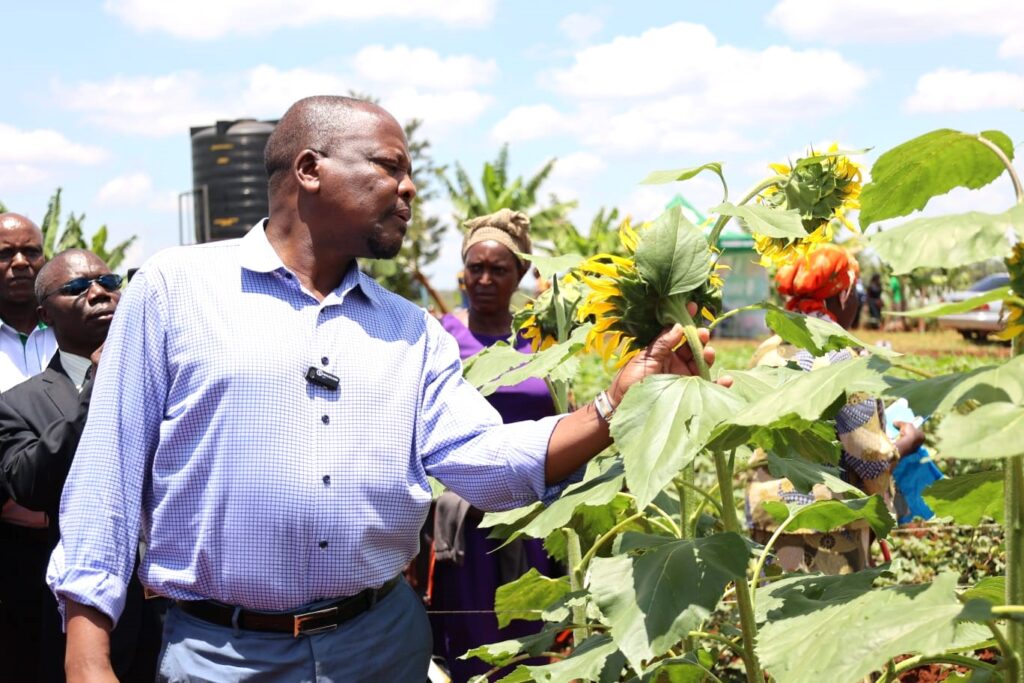
Kagwe said scientists at KALRO are developing new crop varieties that are adapted to climate change while also improving yields per unit of land. He emphasized that modern farming technologies can enable farmers to produce more using smaller pieces of land, making agriculture a viable commercial activity, especially for young people.
“The idea here is to try and increase productivity and encourage farmers, particularly young farmers, to see that you do not need a lot of land to make some serious money from farming,” he said. Kagwe said the government is keen to change the long-held perception that farming is associated with poverty.
The Cabinet Secretary also highlighted the importance of import substitution, noting that Kenya spends about Sh500 billion every year importing food commodities, including wheat, rice, soy and edible oils.
“You can imagine the impact this has on our exchange rates. The idea behind import substitution is first to create security for ourselves. In a rapidly changing global environment, if a war breaks out in a region from which we import wheat, we could suddenly find ourselves without supply. That is why we must grow these crops ourselves.” Kagwe said.
He added that increasing local production of such crops is critical for the country’s food security, sustainability and independence.
At the expo, KALRO researchers highlighted sunflower and soybean as key crops that could significantly reduce the country’s dependence on imported edible oils.
Dr Alice Murage, KALRO Deputy Director General in charge of Crops Research, said the annual expo is organised to expose farmers to new technologies and demonstrate how they can generate income from them.
“We train our farmers about our technologies and more so how they can be able to make money out of them. What we are trying to do in KALRO is to promote the adoption of edible oil crops. One of the things that we are promoting and launching today is sunflower and soybean cultivation,” she said.
She explained that the crops can be produced locally on a large scale, enabling Kenya to reduce imports if farmers adopt the varieties developed by KALRO.
“These are local plants that we have here in Kenya that if farmers embrace and plant in large quantities and increase productivity, we can be able to produce edible oils locally,” she said.
KALRO has already developed four sunflower varieties and two soybean varieties that are being promoted to farmers.
KALRO Chairman Dr Thuo Mathenge said the organisation is working to ensure that agricultural research translates into practical solutions for farmers across the country.
“When we talk about KALRO, mostly we do research, but we are challenging our scientists to move outside the test tube so that farmers can access the information,” he said.
Mathenge pointed to the contradiction of Kenya importing products that could be produced locally, citing starch imports despite the country’s strong agricultural potential. “We are importing a lot of starch all the way from Egypt, a country which is largely a desert, yet Kenya is fertile,” he said.
Mathenge also called for greater involvement of young people in agriculture, noting that modern farming offers income opportunities. He challenged the youth to go and learn from KALRO centres countrywide rather than looking for jobs outside the country.