
By Kimuri Mwangi
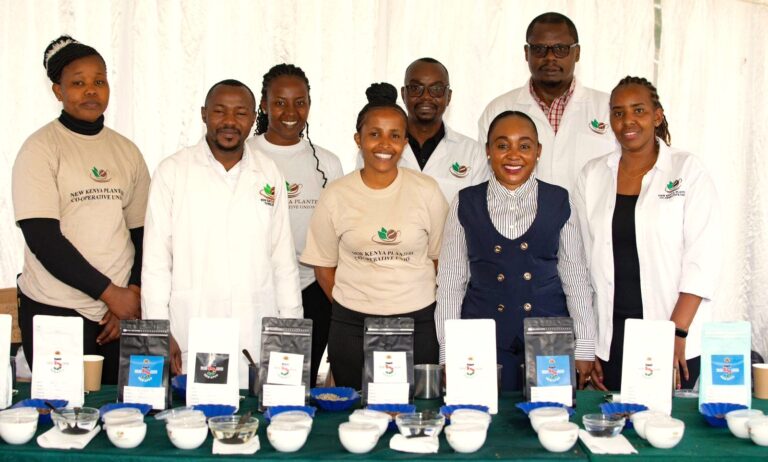
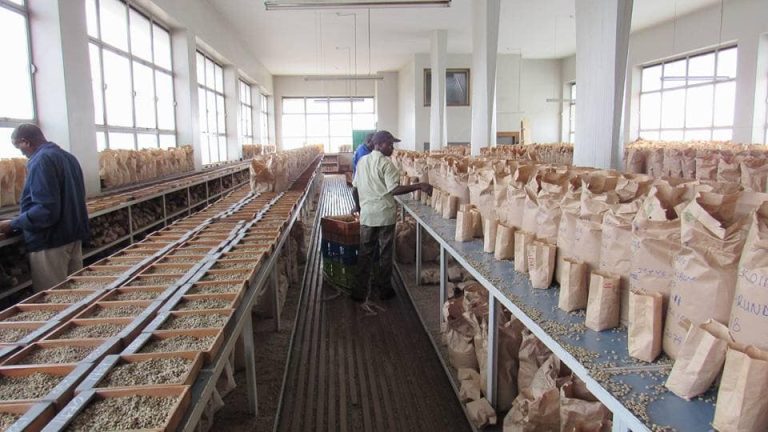
I recently decided to go and meet coffee farmers in their turf, and luckily, I came across an invitation to a Coffee Exhibition that was being held at the Kipkelion Coffee Mills located in the highlands West of the Rift Valley in Kericho County. After a long journey accompanied by heavy rain and missed turns, I arrived at the Fort Tenan area, where the mill is situated.
The compound at the mill was dotted with tents, with farmers milling around, eager for information. As I made my rounds, one particular tent attracted my attention as farmers crowded around it. My curiosity led me closer. Listening keenly, I was not surprised to hear the subject being discussed, since it has now become a trending topic among coffee industry stakeholders — certification.
John Ogoi, the Marketing Manager at Key-Cert Services, explained that certification is a process used to confirm whether a farm, company or organisation follows specific market requirements. “We offer certification services. There are several market requirements, of which today, here at Kipkelion Coffee Mills, we are handling coffee production and the farmers within the region.”
According to him, certification has become important because buyers want proof that coffee is produced responsibly and meets certain standards.
At the exhibition in Kipkelion, Key-Cert Services was encouraging farmers to consider organic certification, which is becoming increasingly popular in global markets.
“Organic certification is now becoming the in-thing in the markets because farmers can get a premium price compared to conventional produce,” Ogoi said.

Organic certification means farmers produce coffee without using synthetic fertilisers, pesticides or other chemical inputs. This method has several benefits. One of the main benefits is access to premium markets where buyers are willing to pay more for certified produce.
Another benefit is environmental protection. “With organic certification, there’s no use of synthetic fertilisers, pesticides and other inputs, which helps in the conservation of the environment and improves sustainability,” Ogoi explained. Organic farming also helps protect biodiversity and ensures that plants, animals and soil systems remain healthy.
Although organic coffee production is still limited in many areas because of the strict requirements, demand for organic products is increasing. Ogoi noted that in crops such as avocado and nuts, the demand for organic produce has grown significantly.
“About 70 percent of avocado is traded as organically certified, which shows that the demand for organic products is increasing locally and internationally,” he said.
The certification process begins when a farmer or organisation shows interest in being certified.
According to Ogoi, the first step is to send a request for an audit to the certification body.
The farmer or company is then given an application form where they provide details about their farm, the production unit, the type of crop they grow and the markets they intend to sell to.
After the application is reviewed, the certification body issues a quotation for the certification process. Auditors are then sent to inspect the farm and any processing facilities to confirm whether production meets the required standards.
If the farm complies with the standards, the auditors prepare a report which is reviewed by the certifier. Once the review is completed and the farm meets the required standards, a certificate is issued.
“With the certificate, farmers can share it with buyers locally or abroad, and they can trade,” Ogoi said. “That’s how Key-Cert helps farmers unlock certification.”
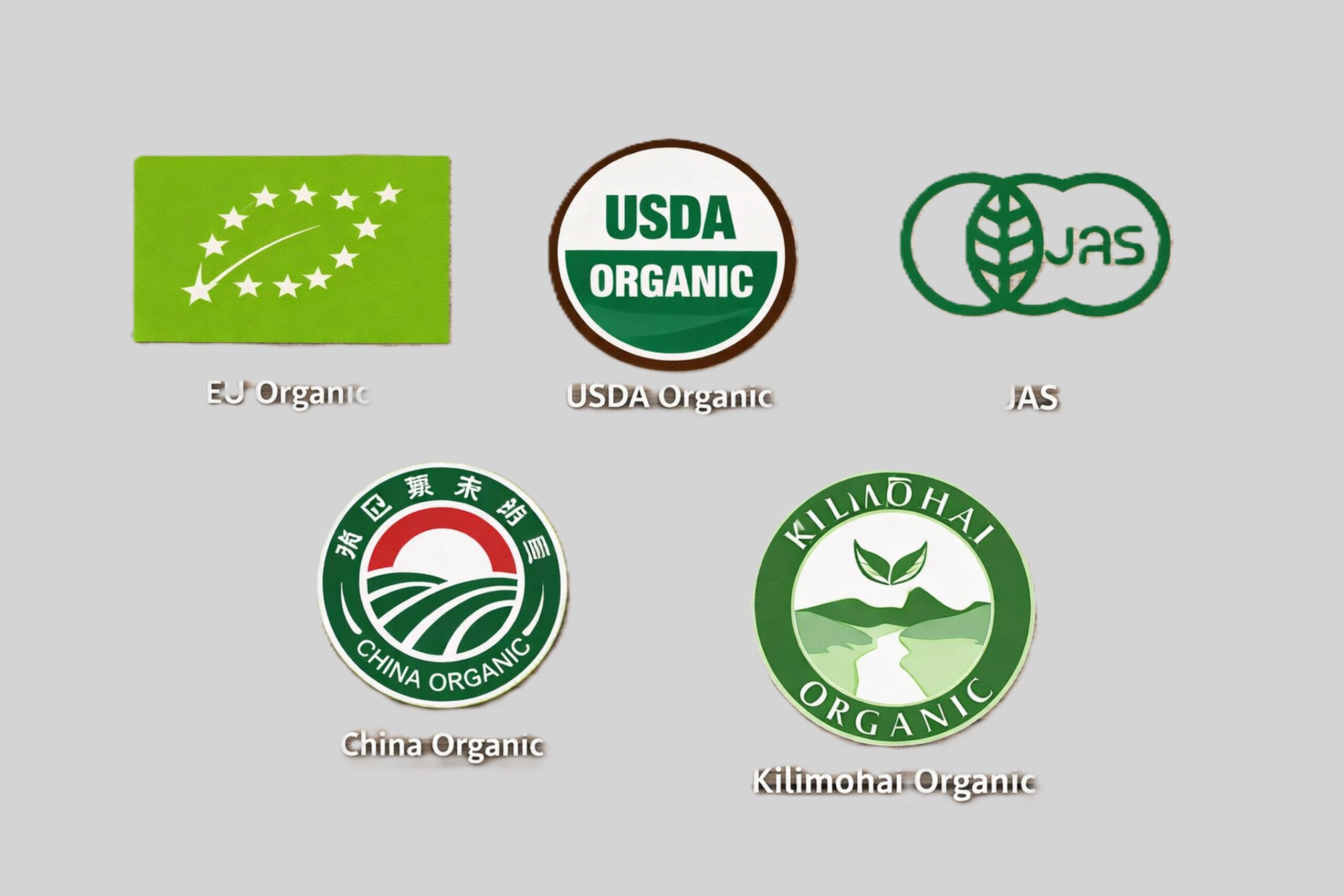
Key-Cert Services certifies several international and regional standards. For organic certification, the organisation offers certification for different markets, including EU Organic for the European Union market, USDA Organic for the United States and Canada, JAS (Japan Agricultural Standard) for Japan, China Organic Standard and Kilimohai, an organic standard used in the Eastern African market
The organisation also offers certification under GLOBALG.A.P., a standard mainly used for fruits, vegetables and flowers.
In addition, Key-Cert provides certification for several ISO standards, including ISO 9001 for quality management, ISO 22000 for food safety management, ISO 14001 for environmental management, ISO 45001 for occupational health and safety and ISO 27001 for information security management. These certifications help producers show that their operations meet international standards.
Coffee value chain expert Henry Kinyua, who analyses coffee prices at the Nairobi Coffee Exchange, confirms that certification can help farmers earn more from their produce.

“One clear benefit of certification is that season after season, certified coffee tends to outperform non-certified coffee by about $10 per bag. Even now, when prices have declined, the difference remains visible. The average price for all coffee sold was $296, while the average price for certified coffee was $306, again showing a difference of about $10 per bag,” opined Kinyua. Certification, he adds, also assures buyers that the coffee has been produced responsibly. “Certification comes in different forms. There is Rainforest Alliance certification, Fairtrade certification, and labour-related certifications, among others. These certifications demonstrate that the coffee being sold has been produced in an environmentally responsible manner and in a way that respects human rights. For example, it shows there is no child labour involved and that prohibited chemicals have not been used. When buyers see a certification label, it acts as a third-party guarantee that the coffee is not only of good quality but has also been produced in a way that is responsible to the environment, to people, and to the broader business ecosystem. This has become increasingly important because many buyers are now interested not only in the taste or cup quality of the coffee, but also in how it was produced.”
Despite the benefits, farmers transitioning to organic farming face several challenges.
Leila Nyagah, the Business Development Manager at Key-Cert Services, said one major challenge is the cost and availability of organic inputs.
“There are challenges that are faced when people or farmers are transitioning from conventional production or farming methods to organic. One of them is that they need to drop the inputs that are synthetic, which are quite cheap, if you compare them with the organic inputs. And this can be a drawback to most of the farmers, because they may not be able to afford the organic inputs. And also, for those who are willing or able to afford it, the availability of organic inputs is limited in our markets. Therefore, this can be a challenge, and we have seen it as a big challenge. We believe that stakeholders in this industry can work on it and be able to bridge this gap,” she said.

Another challenge is the cost of certification itself. However, Nyagah says they encourage farmers to form groups such as cooperatives, self-help groups or producer organisations. This allows farmers to share the cost of certification. “Certification can be as low as $70 per farmer per year, which is quite affordable compared to when you’re doing it alone, and you’re supposed to pay more than $1,000. The best approach is for group certification, because you’re able to share the cost, and also, you’re able to bring up a volume that you can be able to trade and negotiate with the buyer.”
Experts believe the future of coffee certification is promising as farmers increasingly adopt sustainable production practices. Ogoi says more farmers are now willing to embrace certification as they look for better markets and long-term sustainability.
Kinyua feels more sensitisation is needed to increase the number of farmers adopting certification. “The other important aspect is ensuring that farmers are properly sensitised to the benefits of certification. Ultimately, certification must be voluntary. Farmers need to make the decision themselves to follow these standards and demonstrate to consumers that they are responsible producers, farmers who grow coffee in a way that does not endanger the environment, harm consumers, or injure workers and the surrounding community.”