
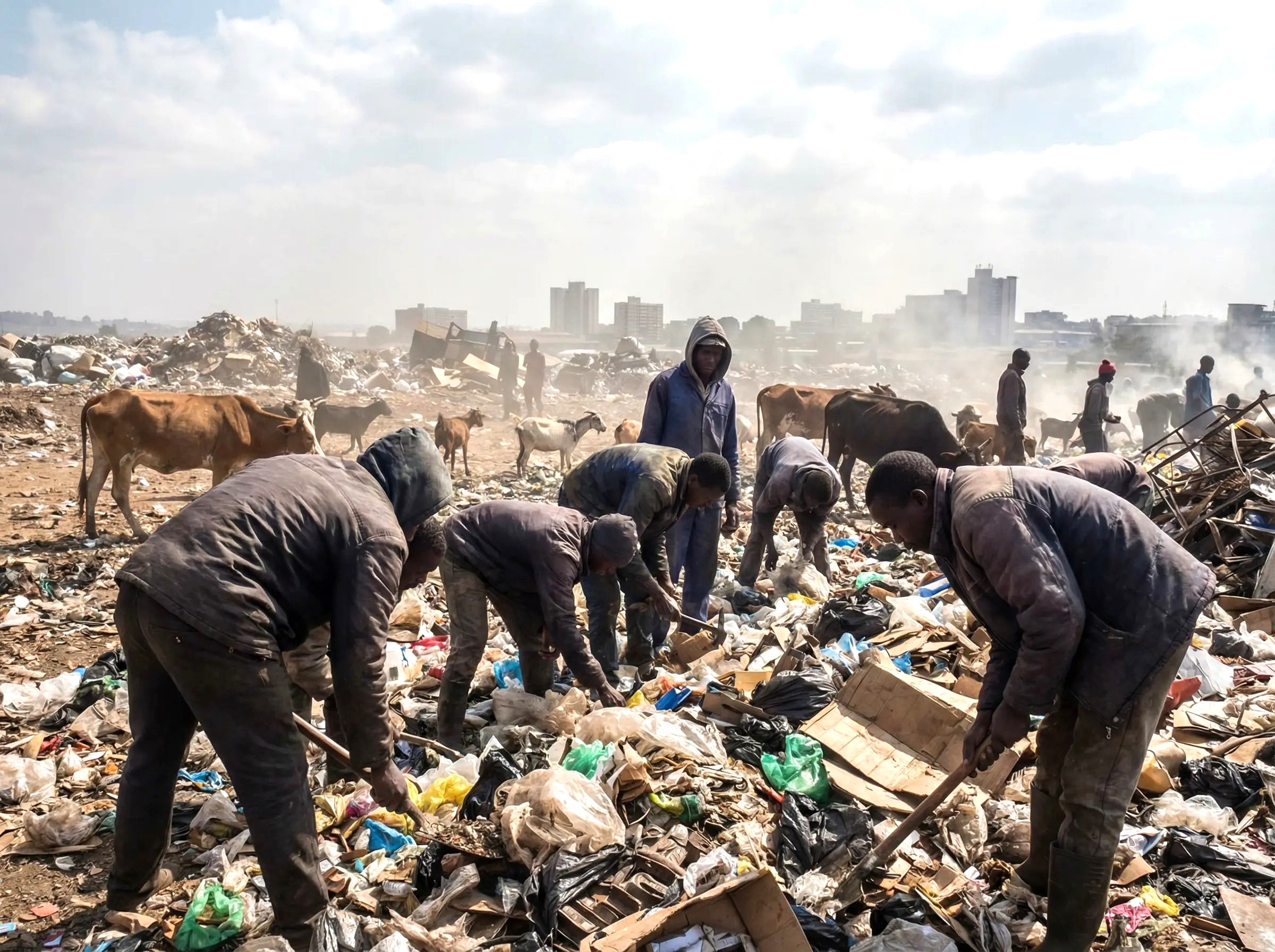
Kenya and Denmark have launched a joint research initiative to investigate the health risks associated with dumpsites, focusing on heavy metals, antimicrobial resistance, and harmful bacteria, as well as how these hazards are transmitted through food systems, water sources, and nearby communities.
The project brings together Kenyan and Danish institutions under a One Health approach that integrates human, animal, and environmental health. The consortium includes the Technical University of Denmark and the Geological Survey of Denmark and Greenland (GEUS), working alongside Kenyan partners such as the Kenya Agricultural and Livestock Research Organisation (KALRO), the University of Nairobi, the Kenya Medical Research Institute (KEMRI), and other collaborating institutions.
Speaking in Nairobi on Tuesday during a stakeholder engagement meeting and launch of the Heavy Metal and Antimicrobial Resistance Exposure Through Waste in Kenya (AMELIORATE) project, KALRO Deputy Institute Director at the Veterinary Science Research Institute, Dr. Moses Olum, said the research will focus on major urban centres, including Nairobi, Mombasa, and Kisumu.
“This project brings together multidisciplinary experts who can work across human health, animal health, and environmental health,” Dr. Olum said. “That is what we call a One Health project.”
Dr. Olum noted that dumpsites receive waste from industrial, commercial, and household sources. While bacteria break down organic waste, toxic heavy metals such as lead from paints, construction materials, and improperly disposed industrial waste persist in the environment.
“These dumpsites often become economic zones of their own,” he said. “People sort waste for recycling, animals scavenge there, and communities live very close to these sites and depend on them for their livelihoods.”
The study will investigate how animals feeding on dumpsites accumulate heavy metals and bacteria, and how these hazards are transferred to humans through the consumption of meat, vegetables, and water. While bacteria can be eliminated through proper cooking, heavy metals remain even after food is prepared.
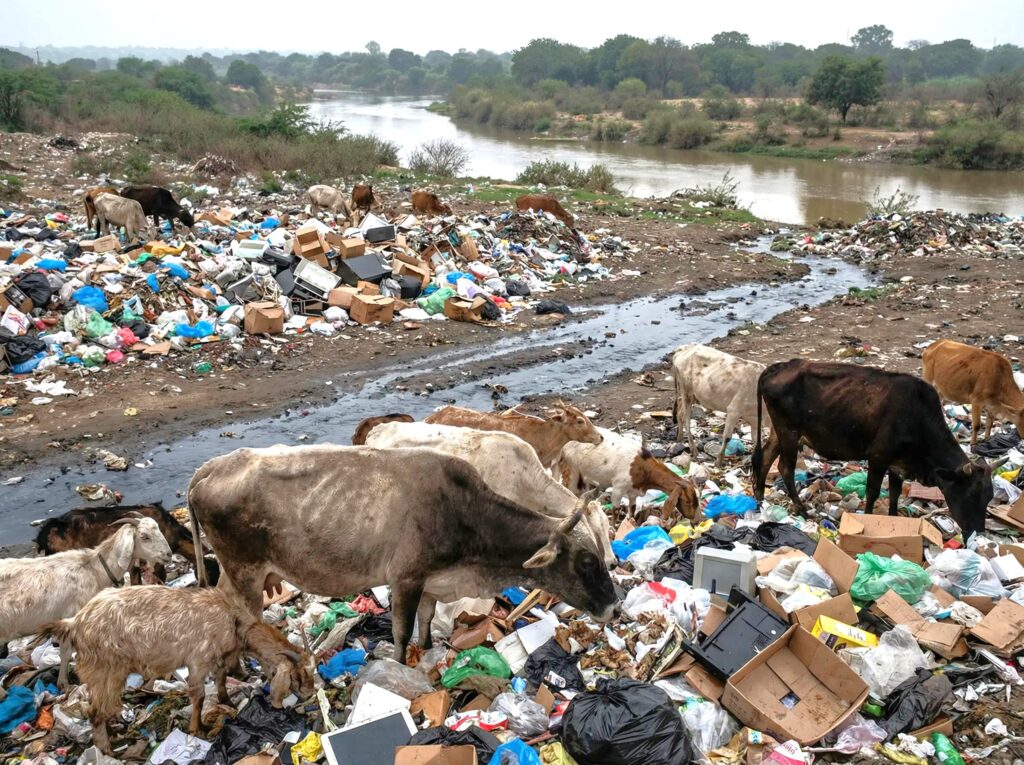
“If animals graze on garbage and people later consume that meat, cooking may kill bacteria, but it will not destroy heavy metals,” Dr. Olum warned.
Researchers will also track how contaminants move from dumpsites into surface water and groundwater, potentially exposing communities far from the waste sites.
“Someone many kilometers away from a dumpsite may still be exposed through water used for drinking, domestic use, or irrigation,” said Anker Høiberg, a senior researcher at GEUS, whose work focuses on mapping how pollutants travel through rivers, groundwater, and soils depending on local geology and topography.
“What has not been studied in depth is how these different pathways are connected and which ones pose the greatest risk to humans and animals,” Høiberg added.
The project will quantify heavy metal levels in waste, livestock, and humans, while also assessing bacterial contamination and antibiotic resistance. Preliminary findings are expected in the coming months, largely generated by master’s and PhD students involved in the research.
Eric Ogalo, a programme officer at the Royal Danish Embassy in Nairobi, said the study is funded through Denmark’s Strategic Sector Cooperation programme, a government-to-government partnership with Kenya.
“The research is important because we want programs and policies that are backed by facts,” Ogalo said. “Waste pickers and nearby communities may be exposed to health risks they cannot see, such as antimicrobial resistance and toxic metals.”
The five-year project is funded with approximately 10 million Danish kroner (about Sh200 million) and supports research, training, fieldwork, and policy engagement. Findings are expected to support the implementation of Kenya’s Sustainable Waste Management Act of 2022 and the country’s transition from a linear to a circular economy. Data generated will also help institutions such as the National Environment Management Authority refine regulations on waste disposal and industrial responsibility.
KALRO’s contribution is led by the Livestock Directorate under Deputy Director General Dr. Evans Ilatsia, alongside Dr. Olum, providing research leadership on animal health and food safety. The directorate is examining how waste influences the spread of antimicrobial resistance and the accumulation of heavy metals in agricultural environments and livestock, intending to inform policy, improve food safety, and support farmers.
Researchers are also emphasising practical measures, including separating food production from dumpsites, the use of protective gear for waste workers, and improved zoning of livestock and agriculture.
“Our goal is to promote a circular economy while protecting communities that live and work around dumpsites,” Dr. Olum said. “People must earn a livelihood, but they must also be kept safe.”
As Kenya grapples with rapid urbanisation and growing waste challenges, the project seeks to provide scientific evidence to guide safer waste management, protect food systems, and reduce long-term health risks for vulnerable communities.