
Uasin Gishu County has launched an ambitious farm ponds programme targeting the construction of 23,000 on-farm water pans across 23 rural wards in a move aimed at expanding irrigation, strengthening climate resilience and shifting farmers from subsistence to commercial agriculture.
The initiative is being implemented under the National Agricultural Value Chain Development Project (NAVCDP) in partnership with the Eldoret-Iten Water Fund (EIWF). It is jointly funded by the World Bank and the Government of Kenya and forms part of a wider programme spanning 33 counties nationwide.
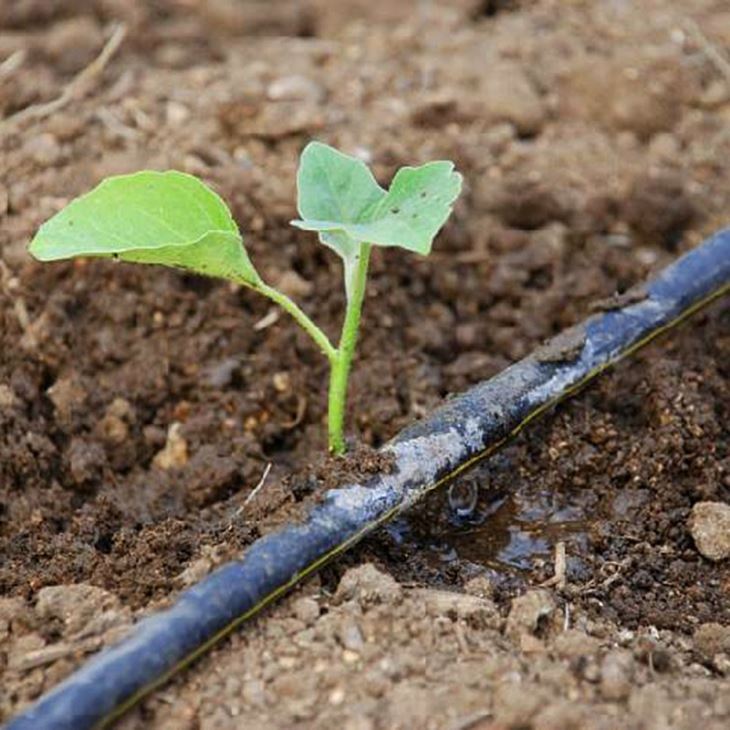
Under the Farm Ponds Initiative, small, demand-driven water pans ranging from 100 to 1,250 cubic metres with a maximum capacity of up to 1,500 cubic metres will be constructed. The ponds are designed to promote water harvesting, expand acreage under irrigation and reduce dependence on unreliable rainfall, enabling year-round farming.
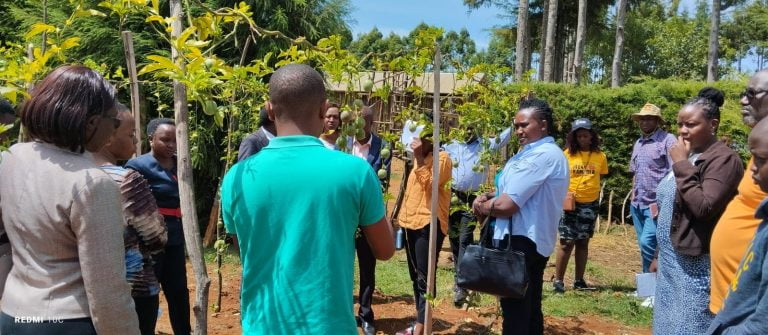
Speaking during a training session for supervisory teams comprising Sub-County Agricultural Officers (SCAOs) and engineers, NAVCDP Monitoring and Evaluation In-Charge for Uasin Gishu, Mark Sanka, said the project seeks to sustainably increase land under irrigation.
“The main aim is to reduce overdependence on rain-fed agriculture by providing reliable water sources for smallholder farmers. This will allow farmers to produce throughout the year and increase overall agricultural productivity,” said Sanka. He noted that the county’s target is 23,000 ponds distributed equally across the 23 rural wards, 1,000 ponds per ward, excluding seven urban wards. According to Sanka, the programme is anchored on the Farmer-Led Irrigation Development (FLID) model, which gives farmers responsibility over the planning, implementation and management of their irrigation systems.
“We are starting with 500 farmers in Phase One and 800 farmers in Phase Two under a cost-sharing arrangement. Farmers will contribute toward excavation and liners, while NAVCDP and the Eldoret-Iten Water Fund will provide subsidies. This phased approach will progressively help us achieve the overall target,” he explained.
County Agriculture Infrastructure Officer (CAIO) Janeth Kirui emphasized that the FLID approach is key to intensifying rain-fed agriculture and unlocking productivity in areas affected by insufficient rainfall.

She said irrigation would make production cycles more predictable, enabling farmers to engage in contract farming, improve quality standards and better respond to climate-related challenges.
“FLID is characterized by farmer initiative and control. Farmers lead in planning, implementation, and management of irrigation systems. These small-scale systems can be implemented individually or through water user groups,” said Kirui.
She added that the model encourages the use of locally available materials, labour and water sources such as rivers, wells and ponds, making it affordable and adaptable to local conditions.
Kirui disclosed that Phase One will see the construction of 500 ponds across the 23 wards between February and May 2026, with each ward implementing about 22 ponds during that period.
By the project’s completion on June 30, 2028, the county aims to provide reliable water access to 5,750 farming households, irrigate 2,300 acres, increase local agricultural production by 50 percent and achieve full market participation among farmers.
To facilitate implementation, trained supervisory teams will cascade knowledge to ward-level officers, who will mobilize and register interested farmers through Community Driven Development Committees (CDDCs).
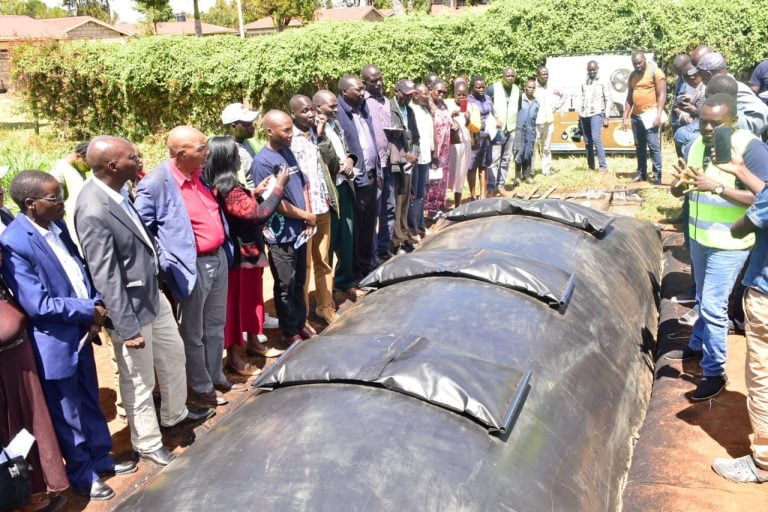
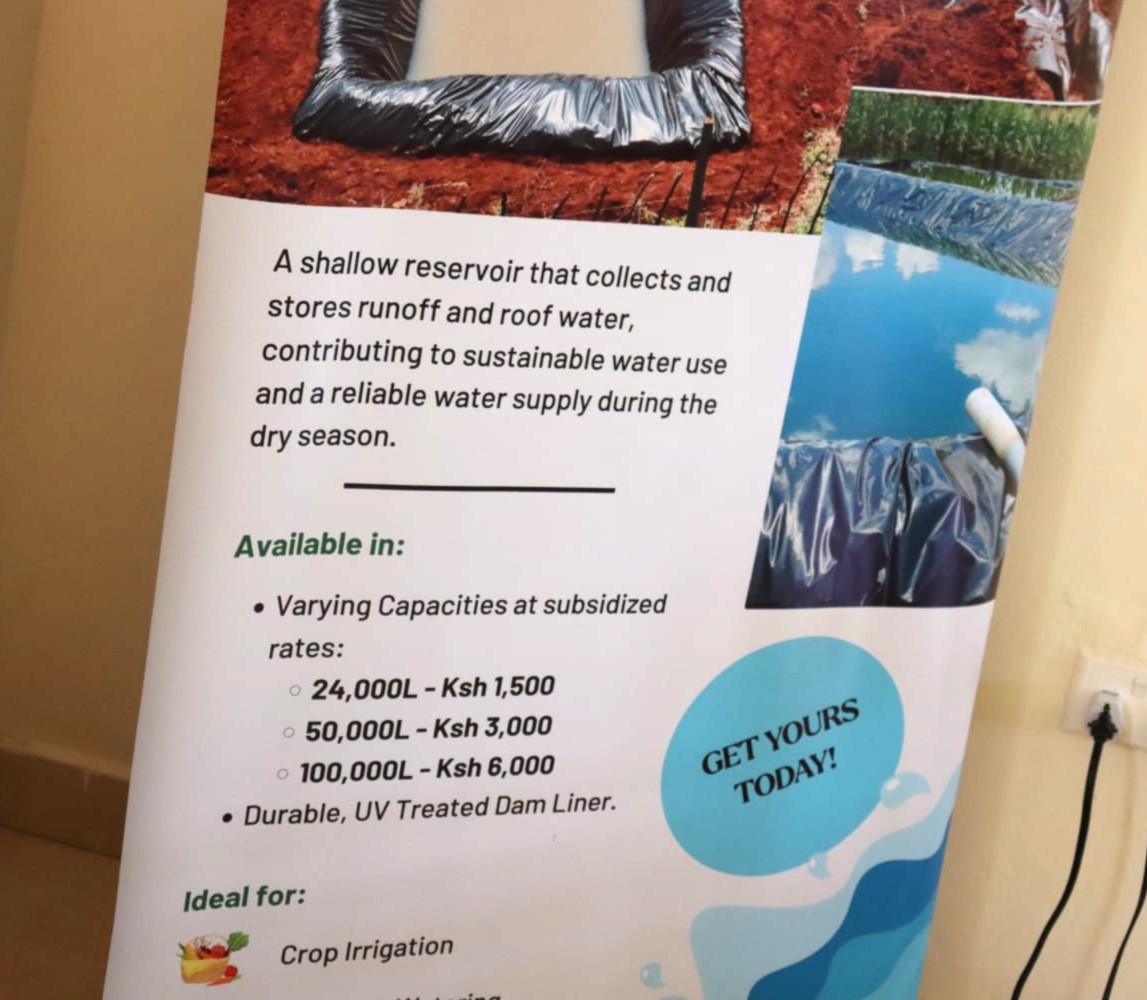
Under the cost-sharing arrangement, farmers will pay 20 percent of excavation costs, amounting to Sh3,000, while NAVCDP will cover 80 percent, equivalent to Sh12,000, through a pay bill arrangement to the CDDC account. For pond liners, farmers will contribute 20 percent (Sh6,000), with EIWF covering the remaining 80 percent (Sh24,000). Beneficiaries will also be required to fence their ponds to enhance safety and durability.
Ward-level oversight committees made up of members from CDDCs and Sustainable Land Management Committees (SLMCs) will be established to provide governance, strategic oversight and accountability in resource management.
Uasin Gishu County Executive Committee Member (CECM) for Agriculture, Agribusiness, Livestock and Fisheries, Sam Kottut, said the project is expected to drive productivity and create employment, particularly for young people.
“This initiative will not only expand irrigation coverage but also create jobs for our youth through pond construction and increased agricultural activities. I urge supervisory teams to actively reach out to farmers to ensure we achieve our pilot phase targets. Farmers should embrace irrigation and consider growing high-value crops to maximize their incomes,” said Kottut.
County officials expressed optimism that the programme will bolster food security, enhance climate resilience and position Uasin Gishu as a leading centre for irrigated agriculture.
They said expanding irrigation infrastructure is critical to shielding farmers from the adverse effects of climate change, stabilizing incomes and ensuring a steady supply of produce to local and regional markets.