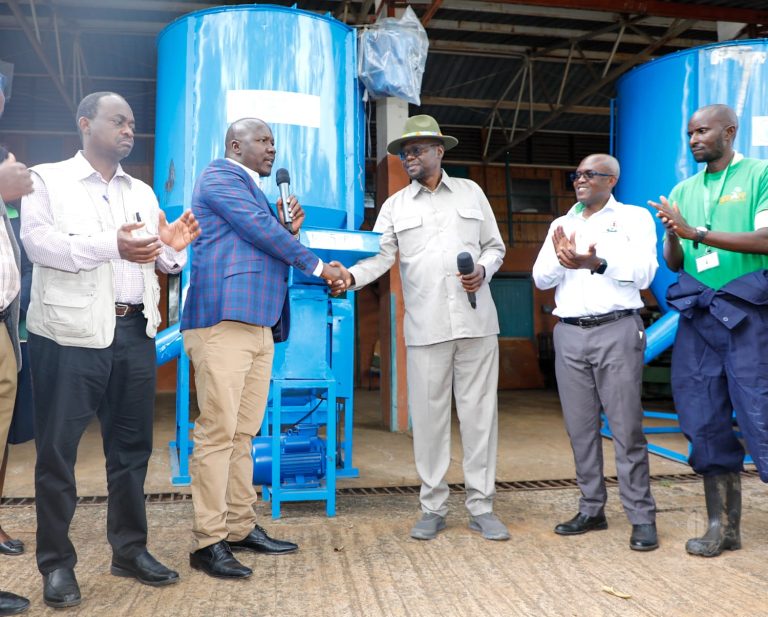

Farmers in Ndalani, Yatta Constituency, Machakos County, have welcomed the delivery of a modern sunflower oil extraction machine, saying it will reduce household expenses, boost incomes and open access to Kenya’s growing edible oil market.
The farmers, led by Uvouni Farmers’ Cooperative Society Chairman Francis Kilango, said the machine will enable a shift from selling raw sunflower seeds to value-added production. Kilango noted that farmers can now extract quality cooking oil locally for household use and sell the surplus.
“This machine allows farmers to control the full value chain,” said Kilango. “Instead of selling sunflowers at throwaway prices, they can process them into edible oil for their families and still supply the market. Kenya has a huge demand for cooking oil, and our farmers are ready to benefit.”
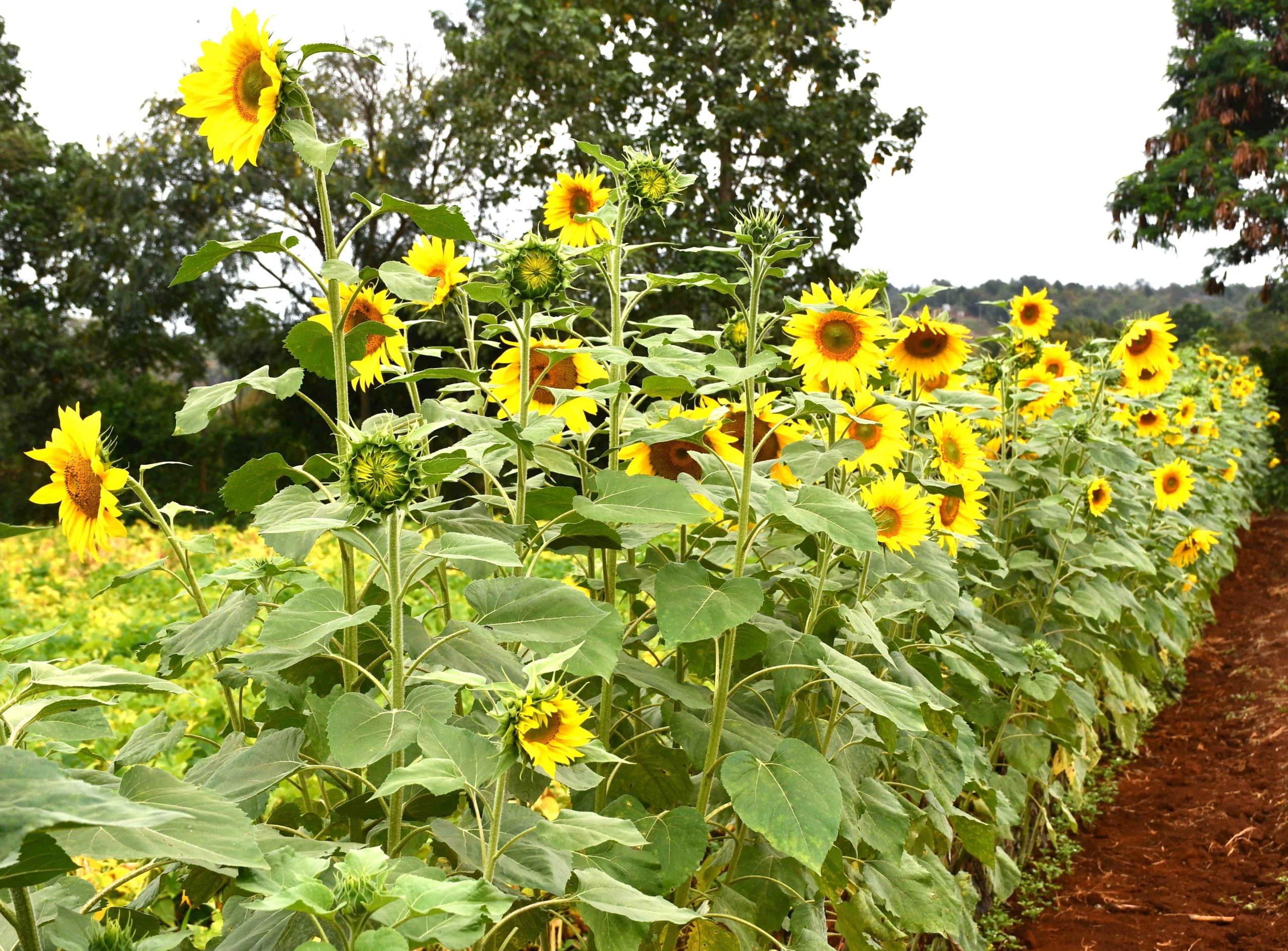
Anastacia Muendo, a local leader working with the Presidential Economic Transformation Team (PETT), said sunflower farming is gaining momentum in Ndalani, across Yatta Constituency and in other parts of Machakos County, mirroring a broader national trend driven by climate change.
She said the move away from maize and beans to sunflower, cotton and soya is a practical response to shifting weather patterns and economic realities in arid and semi-arid regions.
“Maize and beans depend on reliable rainfall, which we no longer have. Sunflowers, soya beans and cotton are drought-resistant and perform well with just a few good rains. This transition is about resilience and sustainability. By embracing drought-resistant crops and value addition, farmers can protect their incomes, create jobs and strengthen food security,” said Muendo.
Muendo urged farmers to prioritise drought-resistant crops, citing the area’s poor and unreliable rainfall.
“With the weather conditions we are experiencing in this region, farmers have no option but to adapt. If they are to sustain their livelihoods and remain productive, they must invest in crops that can withstand dry conditions,” she said.
Steve Kioko from PETT said the government is promoting climate-smart agriculture and strong value chains, adding that plans are underway to introduce and scale up soya farming in the region to complement sunflower production.
“Soya has great potential here,” said Kioko. “We aim to help farmers diversify, add value and access reliable markets so that agriculture remains profitable despite climate challenges.”
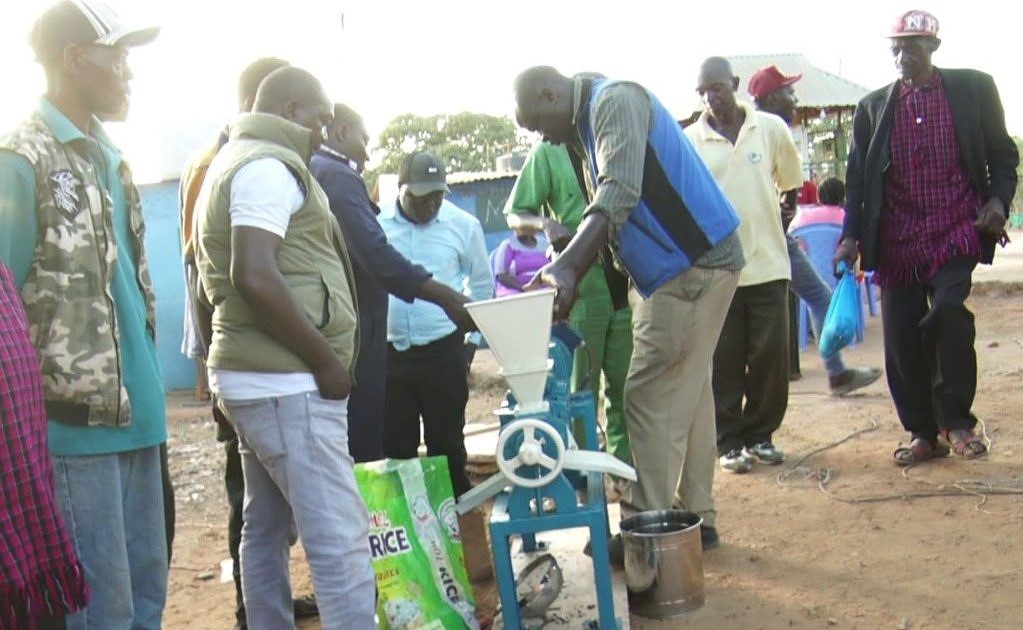
During the launch, farmers observed a live demonstration in which harvested sunflower was pressed into edible oil on site.
“We are determined to increase acreage under sunflowers because this machine has given us renewed hope. We will no longer depend on buying edible oil, which is a big boost for us,” said farmer Peter Kimeu.