

By Kimuri Mwangi
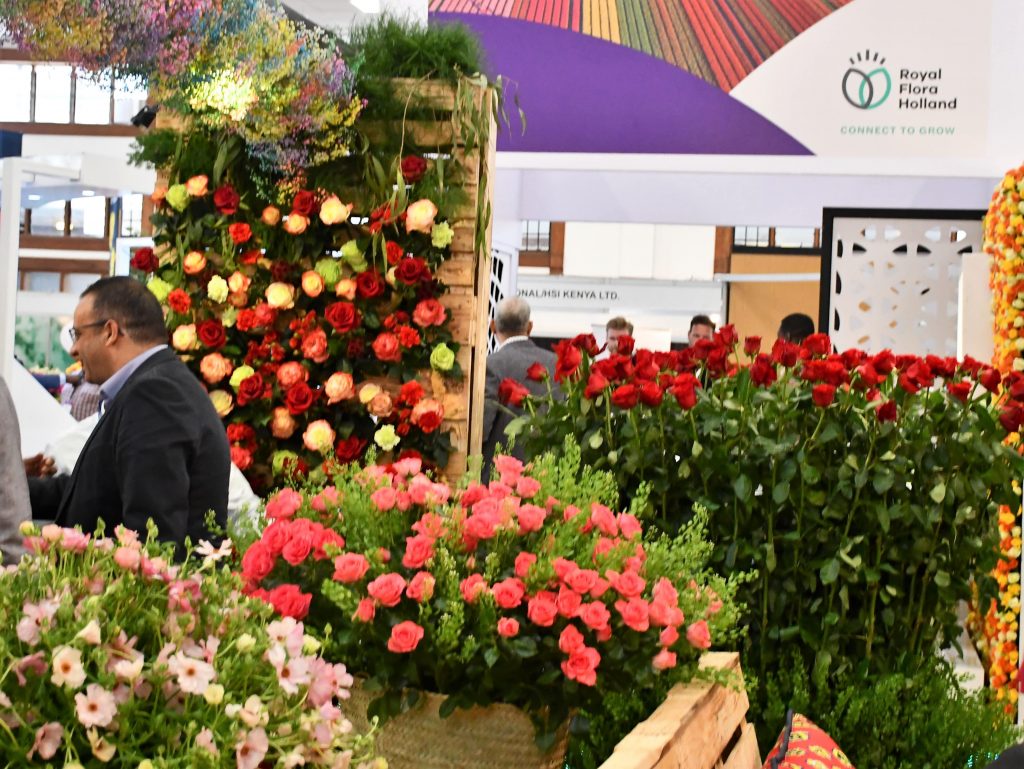
Kenya’s floriculture industry has reaffirmed its position as one of the country’s most resilient and globally competitive export sectors, underpinned by strong market performance, expanding production, and a growing emphasis on sustainability, yet weighed down by rising costs, heavy taxation and logistical bottlenecks.
Engaging the media in Nairobi, Clement Tulezi, the Chief Executive Officer of the Kenya Flower Council (KFC), said the industry remains a flagship contributor to the Bottom-Up Economic Agenda (BETA), accounting for approximately 1.6 per cent of Kenya’s gross domestic product and nearly one-fifth of national export earnings. In 2024, flower exports generated KShs 108 billion (USD 835 million) in foreign exchange, despite the pressure of global inflation and high freight costs.
The sector directly employs approximately 200,000 workers and supports over two million livelihoods across production regions, particularly among women and the youth. Tulezi said this footprint underscores the industry’s importance not only as a foreign exchange earner but also as an anchor of rural economies and county-level development.
Kenya’s position in the global flower trade remains strong. In 2024, the country exported more than 60 million stems of cut flowers alongside ornamentals, commanding about 40 per cent of the European market and ranking among the world’s top four exporters of cut flowers and ornamentals. The industry has also benefited from a structural shift in production away from Europe towards Africa, with Kenya emerging as a preferred production hub.
Production has continued to expand steadily, with an average of 500 to 800 hectares added annually. Total flower production area now stands at about 5,300 hectares, a figure the Council says could rise further if constraints to growth are addressed. After the disruption caused by the COVID-19 pandemic, the sector has largely recovered, recording increased export volumes and renewed investor confidence.

Looking ahead, the Kenya Flower Council projects significant growth if supportive policies are put in place. KFC says the industry has the potential to grow export revenues from USD 835 million in 2024 to more than USD 1.4 billion by 2030, expand production by an additional 5,000 hectares over the next decade, and create up to 20,000 new jobs through value addition at source adding that these ambitions align with BETA priorities on export-led growth, job creation, climate-smart development and small and medium enterprise empowerment.
A notable recent development has been the rising participation of smallholder and medium-scale growers supplying export markets through consolidation. Over the past year, KFC has registered more than 20 new members, many of the smaller growers entering export markets for the first time. Expansion has been recorded in counties such as Nakuru, Naivasha, Kiambu, Meru, Uasin Gishu and Nyandarua, signalling what the Council describes as a healthy pipeline of producers.
“Supporting growth through smallholders is critical because it expands household income in rural areas, increases county-level export earnings, deepens Kenya’s competitiveness through diversified supplies, and strengthens resilience by broadening the producer base. Many of these firms are entering the export market for the first time and require predictable regulatory policies and affordable compliance pathways,” opined Tulezi.
He added that the council is supporting them in various aspects, like certification and capacity building. On certification, the council has adopted the group certification model, where the growers form groups and get certified. This enables them to enter the export market without the fees and logistical hindrances. The smallholder growers are also supplying the large-scale growers with specific produce, making it a win-win situation.
On sustainability, the industry continues to face global scrutiny over pesticide use, but KFC says Kenya remains a leader in ethical and environmentally responsible floriculture. More than 80 per cent of flower exports are certified under the Kenya Flower Council’s Flowers and Ornamentals Sustainability Standard (FOSS), which enforces strict controls on pesticide use, environmental protection, responsible chemical handling, labour standards and supply chain transparency.
Under the FOSS framework, growers must comply with global residue standards, provide safe working environments, fair wages and strong labour protections, and implement gender-responsive workplace policies. The standard also promotes water efficiency, carbon reduction and biodiversity conservation.
“We are in line with the processes and structures within the market, especially the Floriculture Sustainability Initiative, where we are founder members, and we have remained a core in their business, moderating every pesticide that is used here in Kenya and what is acceptable in the market. We work closely with government institutions, especially the Pest Control Products Board (PCPB) to ensure that this list is up to date and it corresponds to what is needed in Kenya but also in the marketplace. KFC’s FOSS ensures responsible pesticide use and compliance with global residue standards being adhered to,” the CEO added.
The floriculture sector is among the largest formal employers of women in rural Kenya, and KFC says farms are increasingly adopting grievance mechanisms, childcare protections and women-focused skills development programmes.
Market access remains a priority, with continued participation in international trade fairs and expos seen as essential to retaining market share, securing logistics channels and expanding into Asia, the Middle East and the Americas. KFC says government facilitation of trade missions, export promotion financing and bilateral agreements is vital to unlocking these emerging markets and strengthening national branding around sustainability.
Despite these strengths, the industry faces mounting barriers to competitiveness. Growers contend with more than 50 levies and charges, creating high operational costs and regulatory unpredictability, according to Tulezi. “We pay over 50 levies and taxes and other charges every year, creating unpredictable and highly operational inefficiency and costs. We are currently dealing with delayed refunds of VAT exceeding Kshs 12 billion, creating liquidity challenges and pressure, forcing growers into postponing expansion on the farms and having to borrow from commercial lenders who are lending us at a very expensive rate. Taxes continue to discourage value addition, especially when we have a tax on locally sold flowers. It doesn’t spur up what we call value addition, where we can do finished bouquets from this end and be able to export. Recently, we have seen costs going up in what we call the Kenya Bureau of Standards (KEBS) levy. It has gone up from a cap of 400,000 per year to now 4 million per year, and this will definitely go up by 2030 to 6 million.”
The introduction of the Unique Consignment Reference fee (UCR) and a 25 per cent excise duty on kraft paper used in flower packaging have added to production expenses. The Council says these costs undermine Kenya’s competitiveness, particularly against regional peers such as Ethiopia.
Logistics remain a major challenge. Air freight costs from Kenya, estimated at up to USD 5.3 per kilogram, are among the highest globally, compared with about USD 2 per kilogram in neighbouring countries. With freight accounting for 30 to 40 per cent of total production and selling costs, the Council warns that exporters struggle to compete in the same markets.

To address these challenges, the Kenya Flower Council has urged the government to prioritise reforms that restore liquidity and predictability. Key recommendations include fast-tracking settlement of verified VAT refunds, removing refund caps for large exporters, and allowing refunds to be offset against other tax obligations.
The Council is also calling for the rationalisation and harmonisation of levies through a predictable single-levy model, exemption of agricultural exports from the standards levies, a return to volume-based horticultural crop levies, a reduction and cap on the UCR fee, and the abolition of excise duty on imported kraft paper.
“We are calling on the government to digitalize approval of apply-once, pay-once efficiency, ensure regulatory impact assessment before introducing new taxes, and prioritise cold chain logistics investment and mechanisms that alleviate the high cost of air freight, especially at the Jomo Kenyatta International Airport (JKIA),” opined Tulezi.
KFC says it remains committed to working with national and county governments, regulators and development partners to protect export jobs, promote value addition, expand foreign exchange earnings, encourage digital transformation and accelerate climate-smart agriculture. With a more predictable business environment, the Council believes the sector can safeguard more than 200,000 direct jobs, unlock over USD 1.4 billion in export earnings by 2030, strengthen Kenya’s global competitiveness and accelerate rural development.
Despite these challenges, Tulezi says that there is a huge potential to grow the sector. “We are calling for the expansion of our foreign exchange earnings because we are in a competitive world. We are competing with the giants from South America, and whatever processes they are putting in place to create an enabling environment for businesses to thrive, we have examples that we can copy from them and implement in Kenya. KFC now calls on government regulatory bodies to facilitate growth, rather than constraining it, by ensuring that Kenya remains the home of the world-best flower growers. We have been able to demonstrate this over the last 35 years, and we believe that we have huge potential to be able to grow this sector. In 2026, we see a huge potential for us as a country.”